2020 census
3,495,993
Kam people counted in China — nearly half of them in Guizhou.
Gaeml侗族Dong
A people of song, wood and rice.
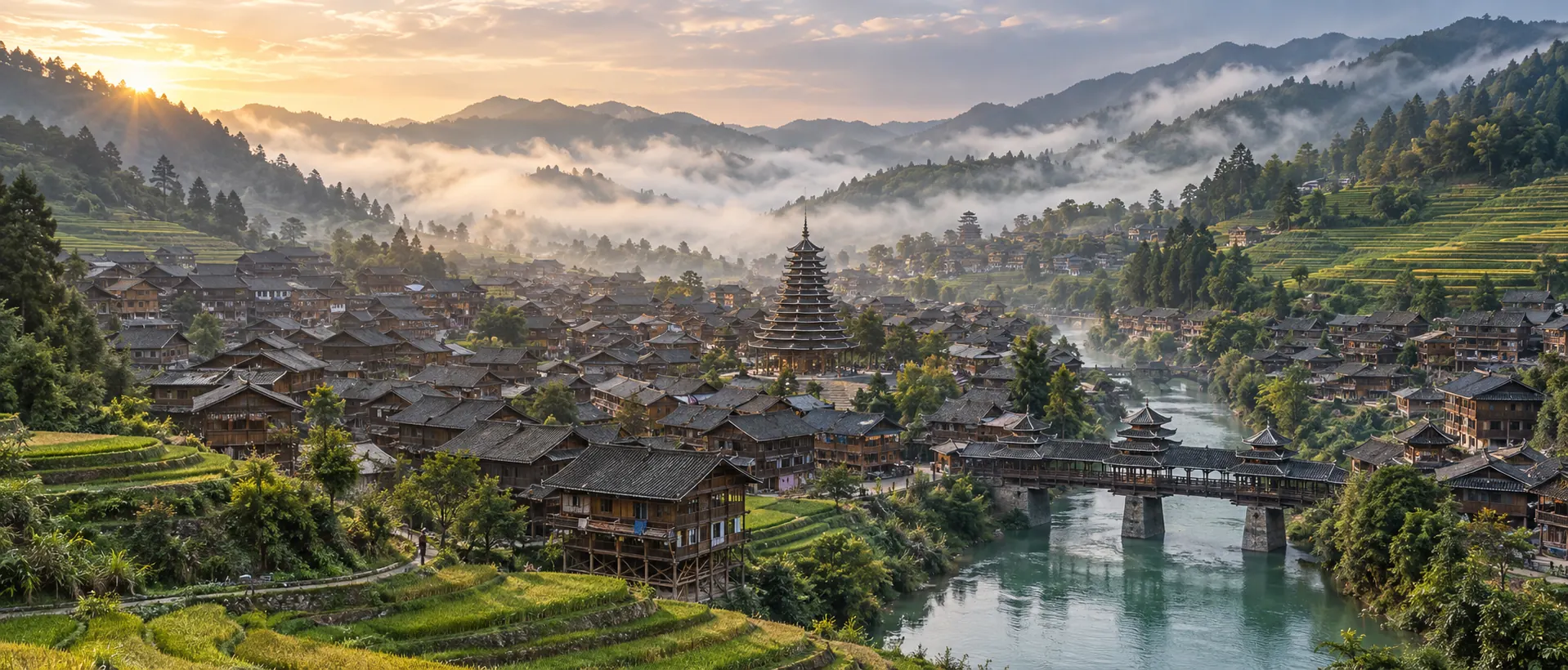
Into the mountains where Guizhou, Hunan and Guangxi meet.
Your ambassador
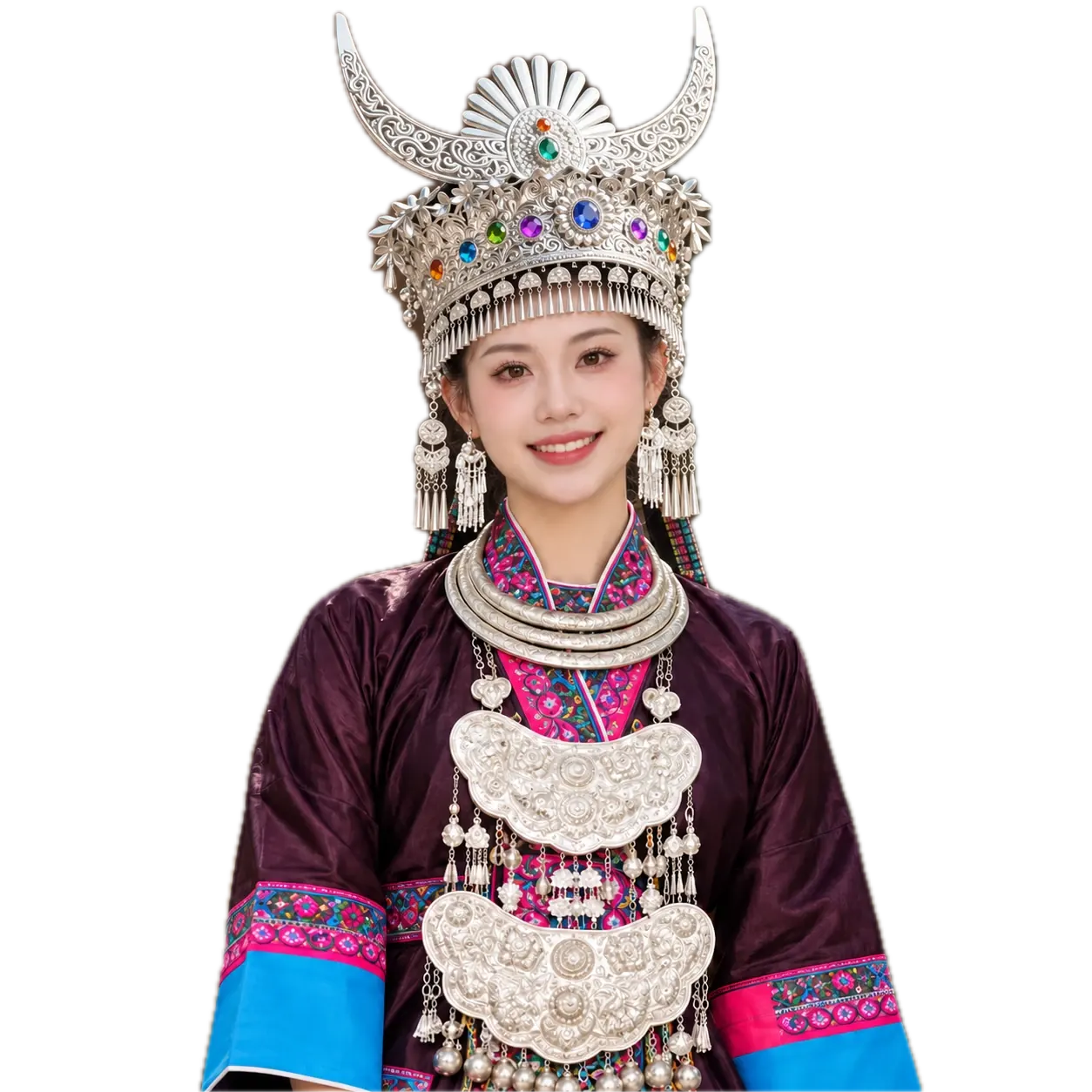
Come in from the mist. I’ll walk you through the drum towers, the roofed bridges and the songs of the Kam.
Meet the Kam
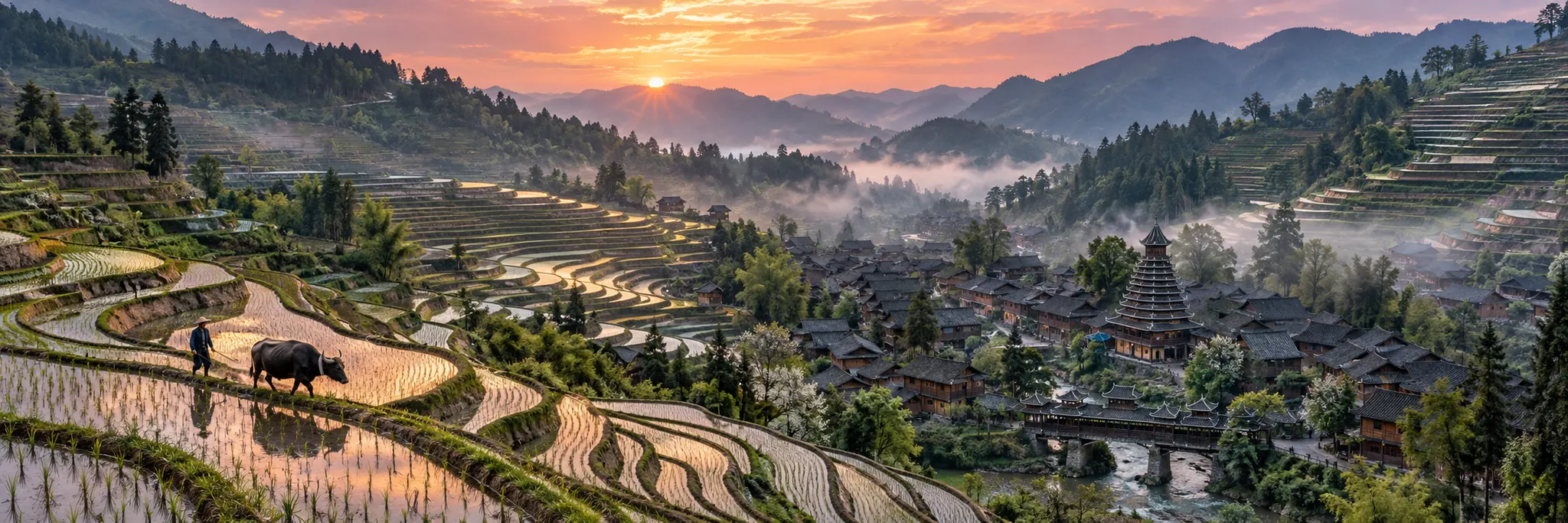
Three and a half million people in green mountain valleys. Villages of fir built without a single nail. Bridges with roofs. Towers that hold a drum. And a history kept not in books, but in song.
2020 census
3,495,993
Kam people counted in China — nearly half of them in Guizhou.
15
tones in Kam speech — nine on open syllables, six on checked ones.
0
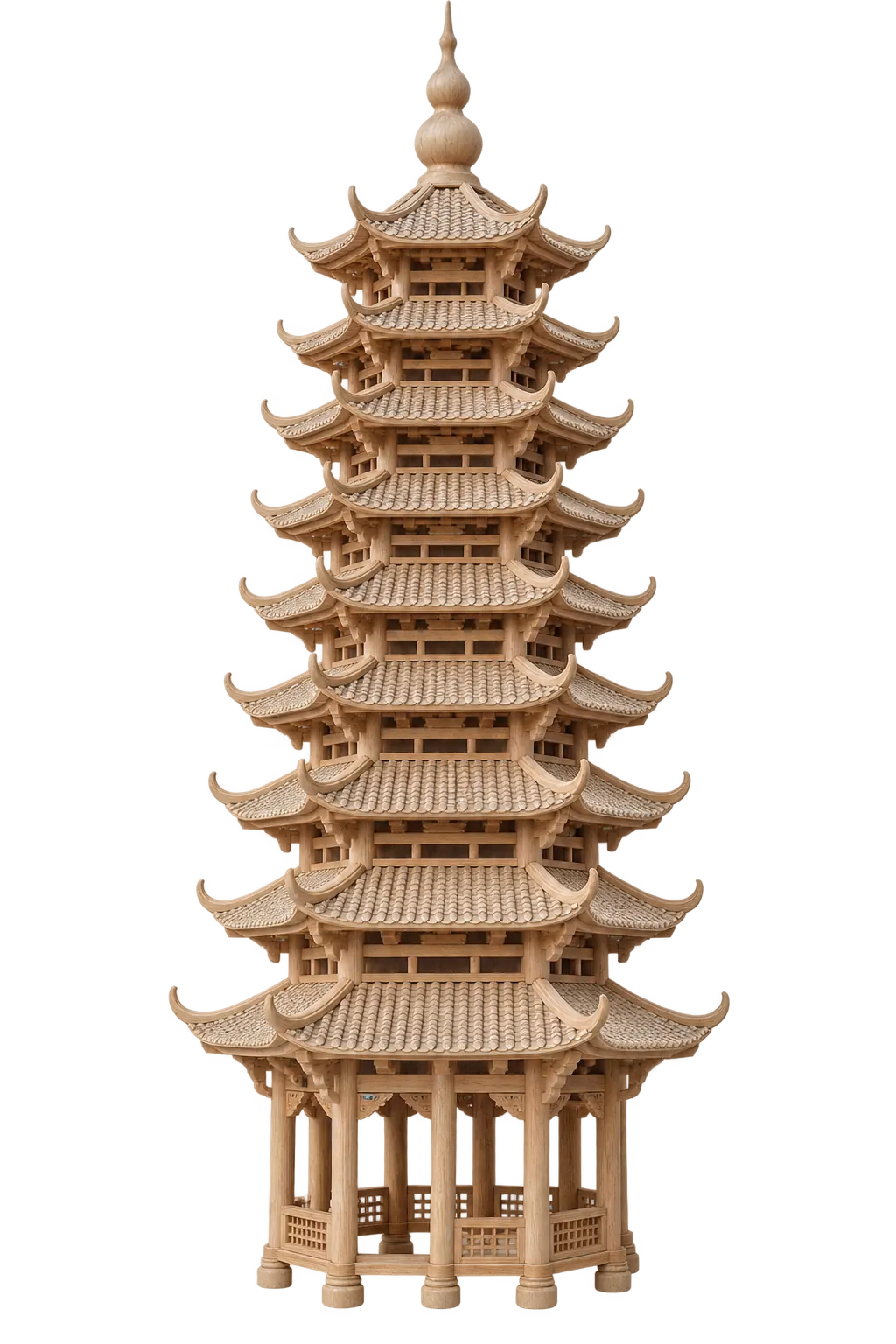
nails in a traditional drum tower. Every beam is joined by mortise and tenon.
UNESCO
2009
The Grand Song joins the Representative List of the Intangible Cultural Heritage of Humanity.
FAO GIAHS
2011
Congjiang's rice-fish-duck fields recognised as globally important agricultural heritage.
Alphabet
1958
A Latin script is created for Kam, a language with no traditional writing.
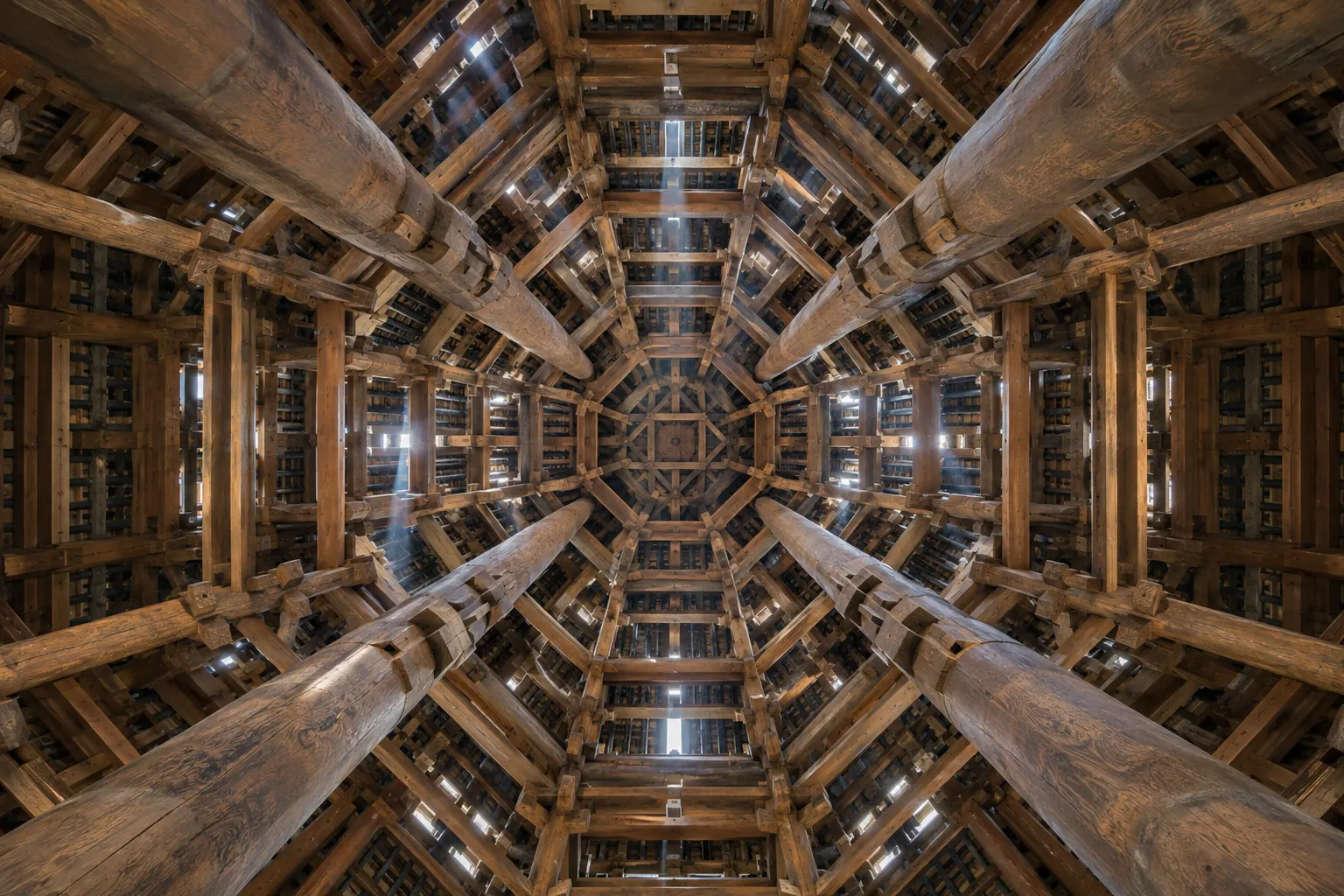
The Drum Tower

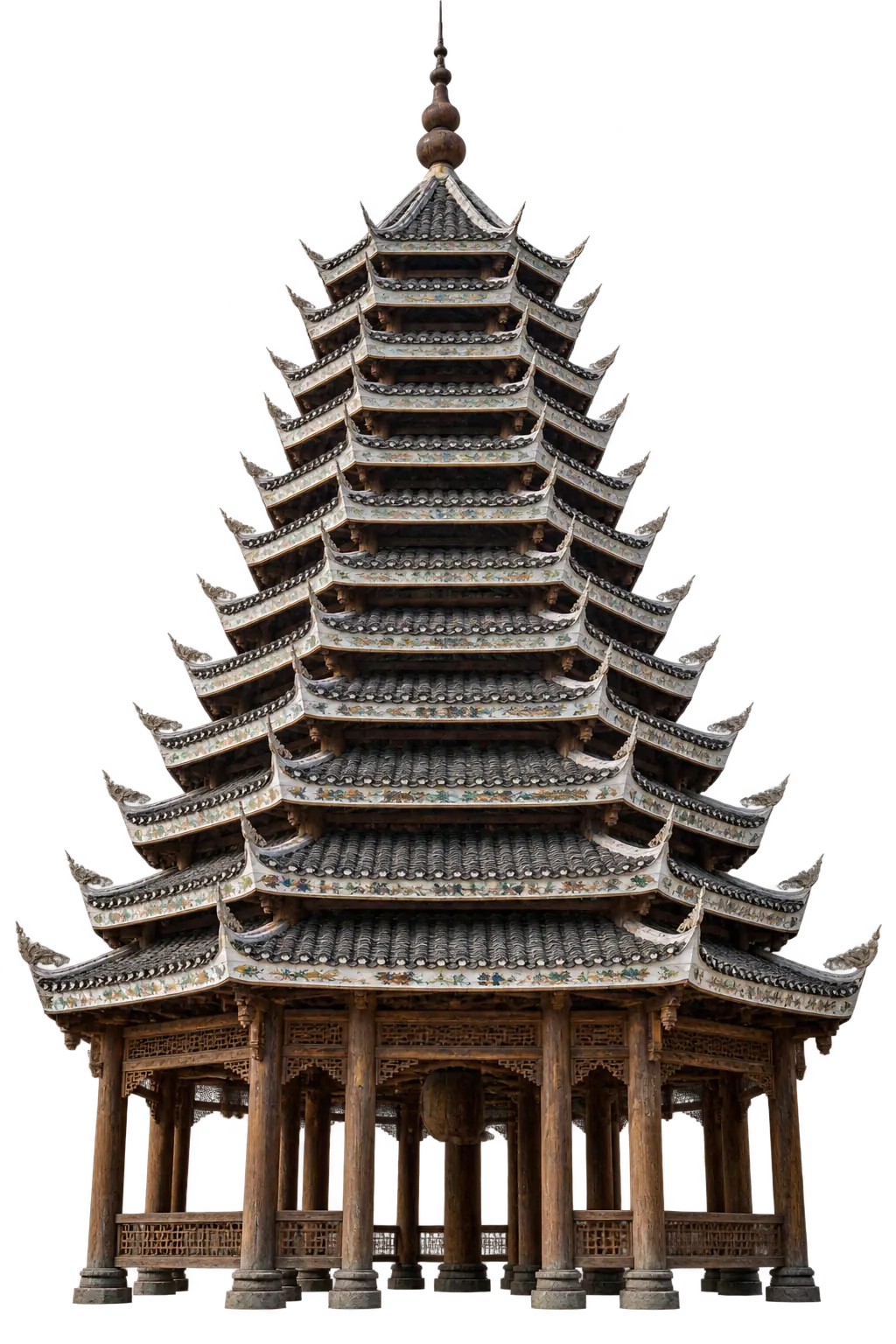
Usually an odd number of tiers, tapering like the fir tree the Kam build with.
Struck to call the village together — for council, for danger, for celebration.
Fir trunks carry the whole tower. Beams lock into them by mortise and tenon.
The open hall below is where elders talk, disputes are settled and songs are taught.
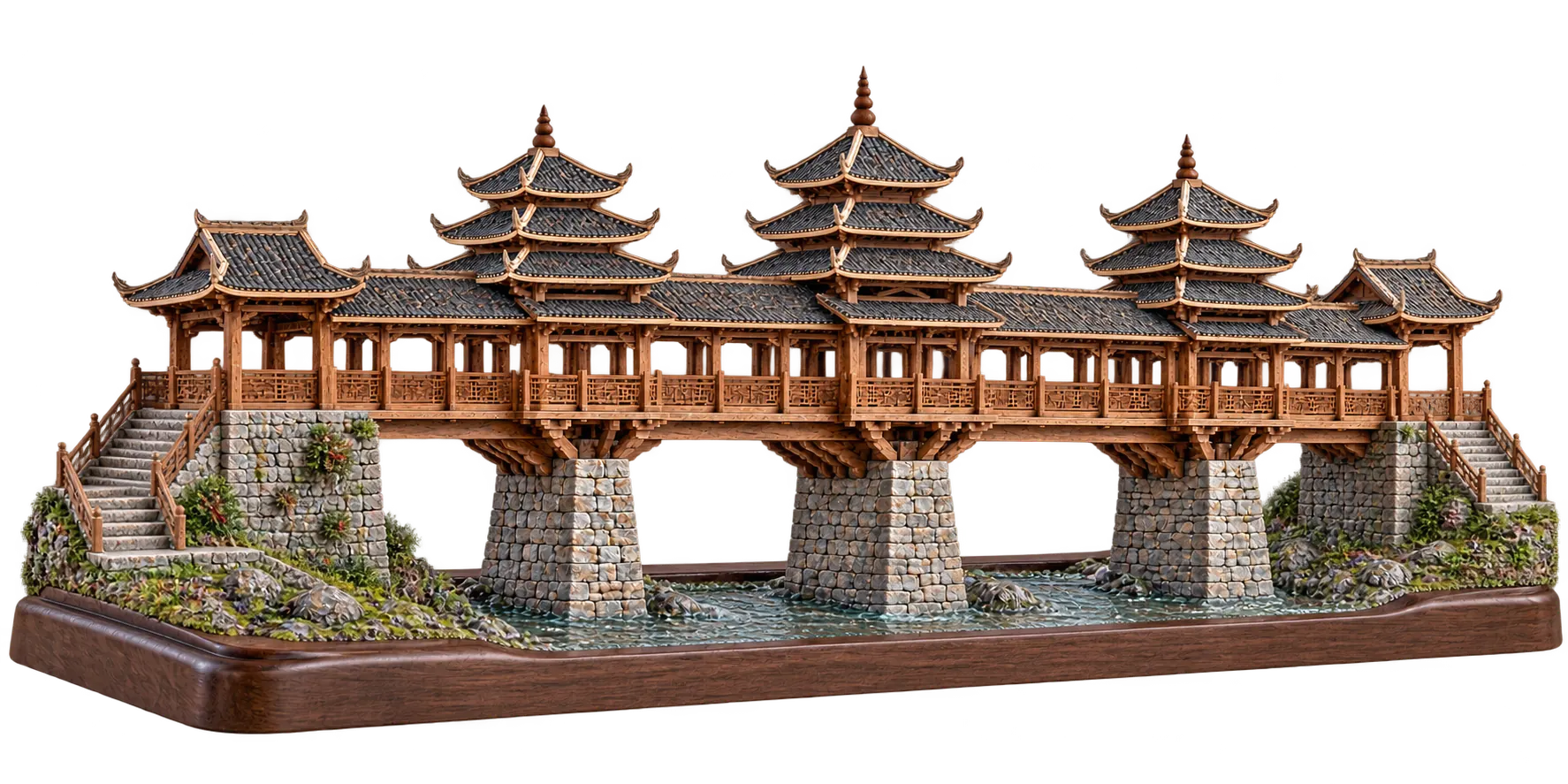
Wind & Rain Bridges
Kam villages cross their rivers on covered timber bridges — shelter for travellers, a market for neighbours, a meeting place for the young. Their painted beams earned them another name: flower bridges.
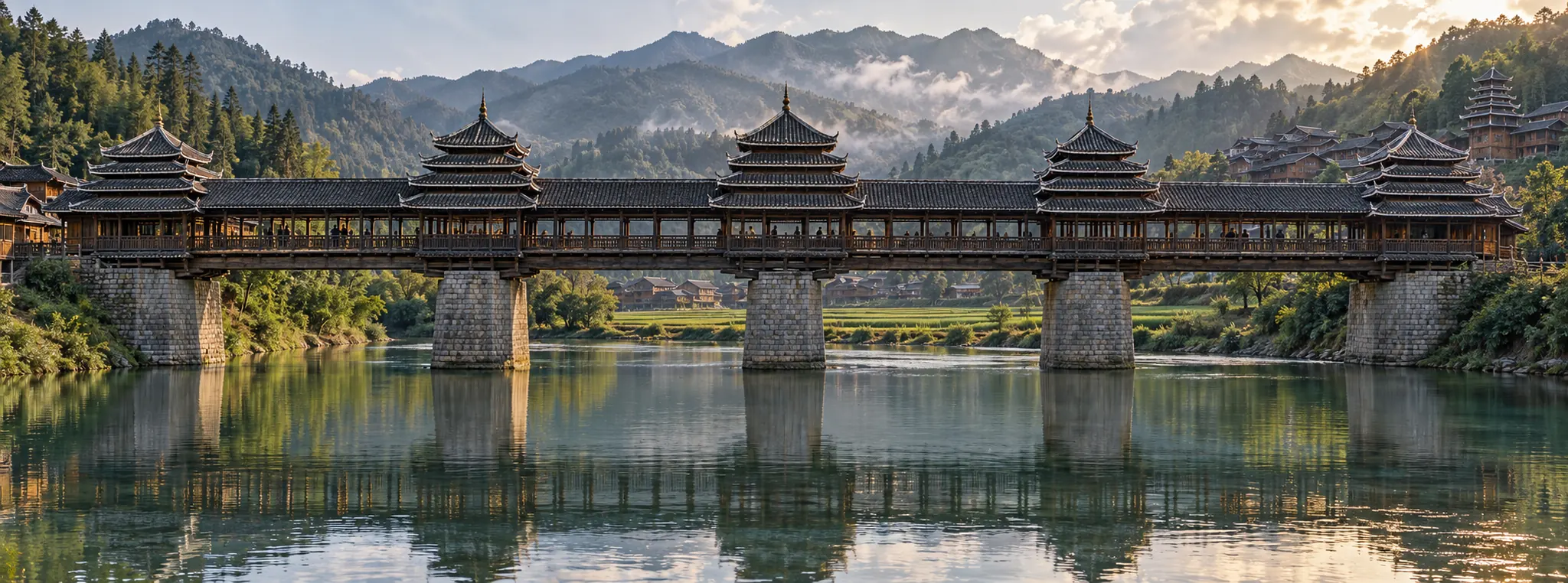
Chengyang Bridge · Sanjiang, Guangxi
Fifty elders from eight villages gathered money, timber, grain and labour to raise it — on stone piers, joined without a single nail.
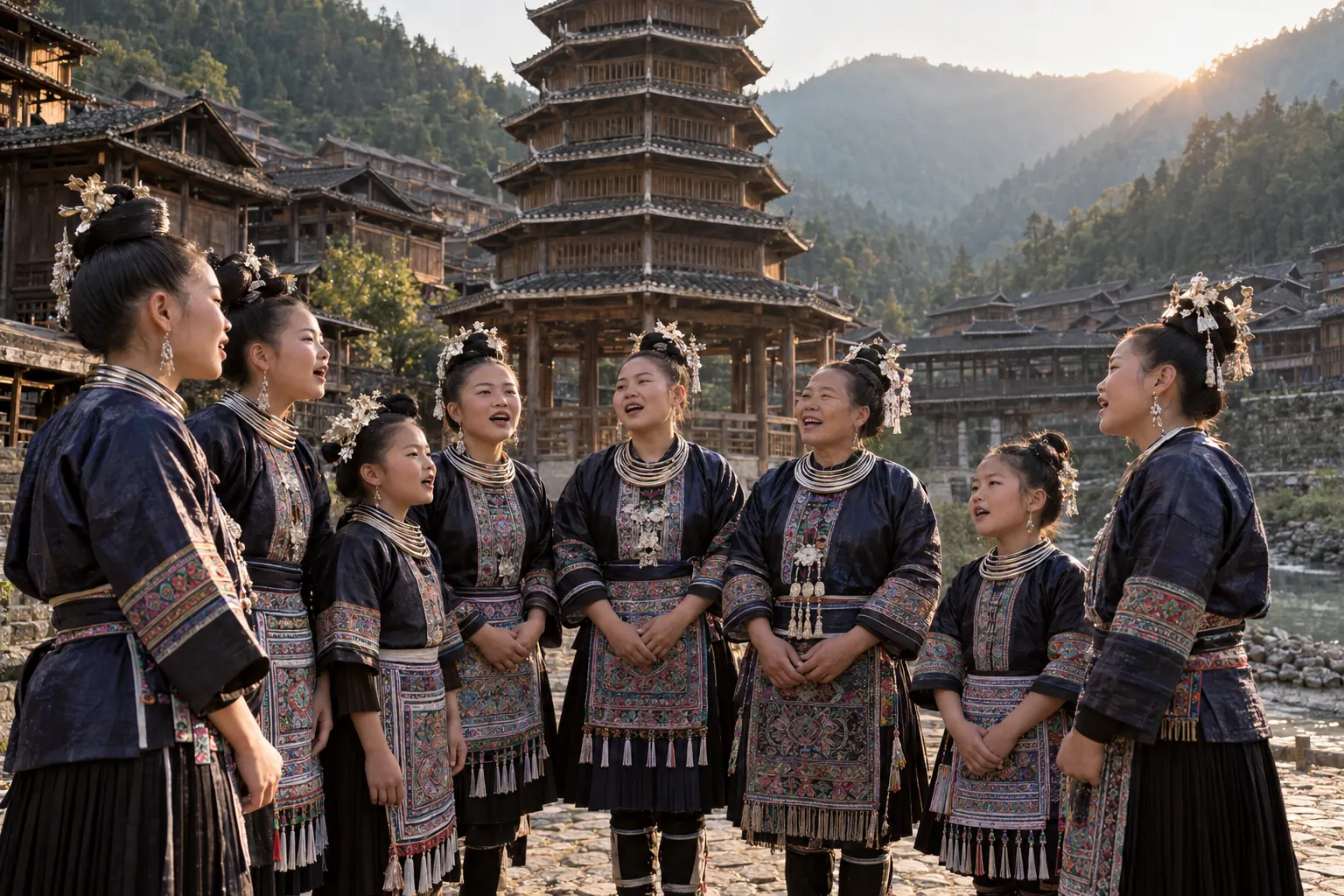
The Grand Song · 侗族大歌
One voice. Then two. Then the whole village.
Many parts. No conductor. No instruments.
“Rice nourishes the body, and songs nourish the soul.”
A saying of the Kam of Guizhou
Sung in the drum tower by choirs grouped by age, the Grand Song imitates cicadas, birds and running water. Masters teach it to disciples, voice by voice, for years.
UNESCO calls it a Dong encyclopaedia: village history, knowledge of the natural world, and how to honour elders and neighbours — all kept in memory, in harmony.
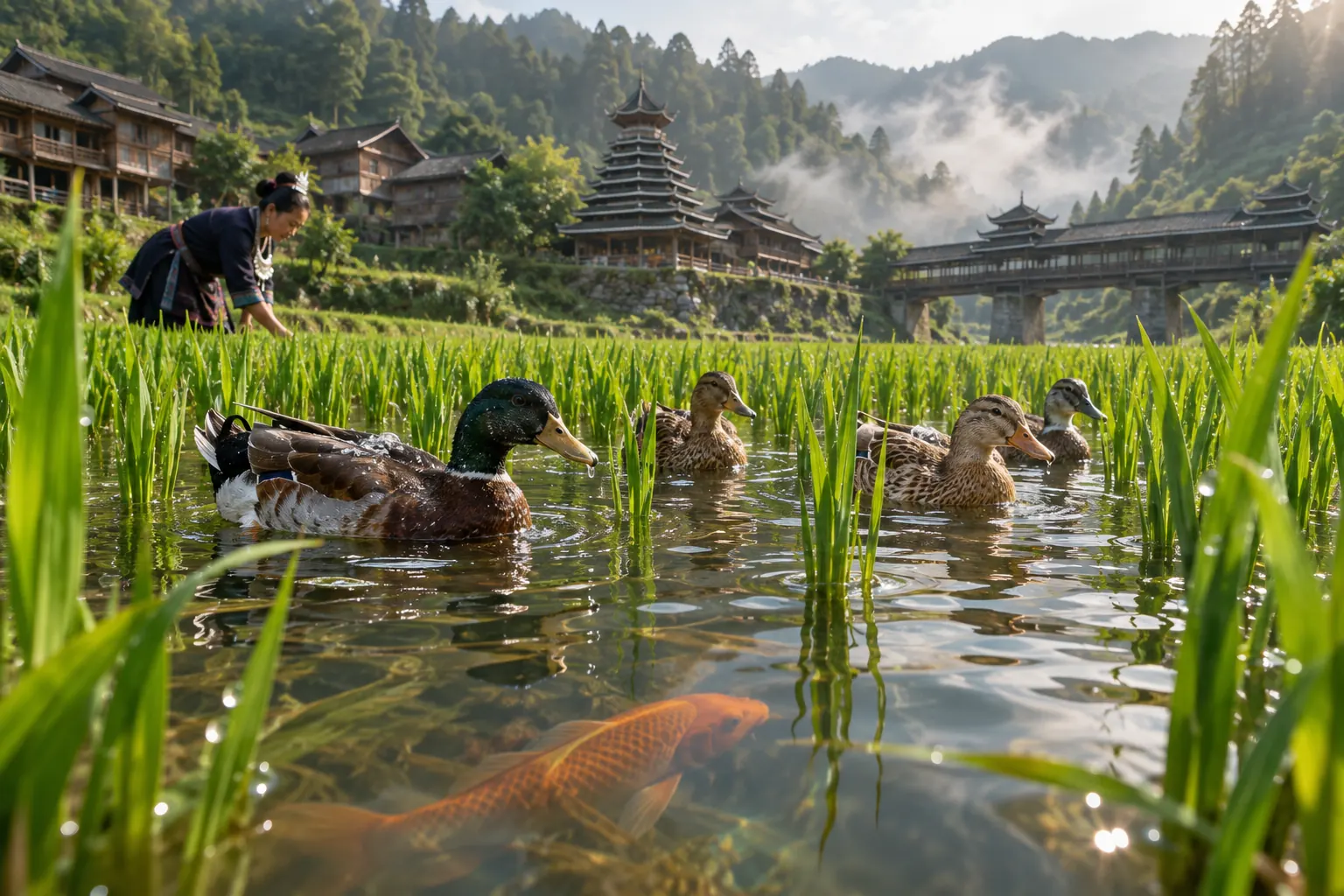
Rice.
Fish. Kam: bal
Duck. Kam: bedl
In Congjiang, Guizhou, fish are released into the flooded paddies each spring, and ducks follow. The fish and ducks eat weeds and pests and stir and fertilise the water. The field gives back rice, fish and duck.
FAO · Globally Important Agricultural Heritage System
Since 2011
Dong's Rice-Fish-Duck System, Congjiang County
The Kam Table
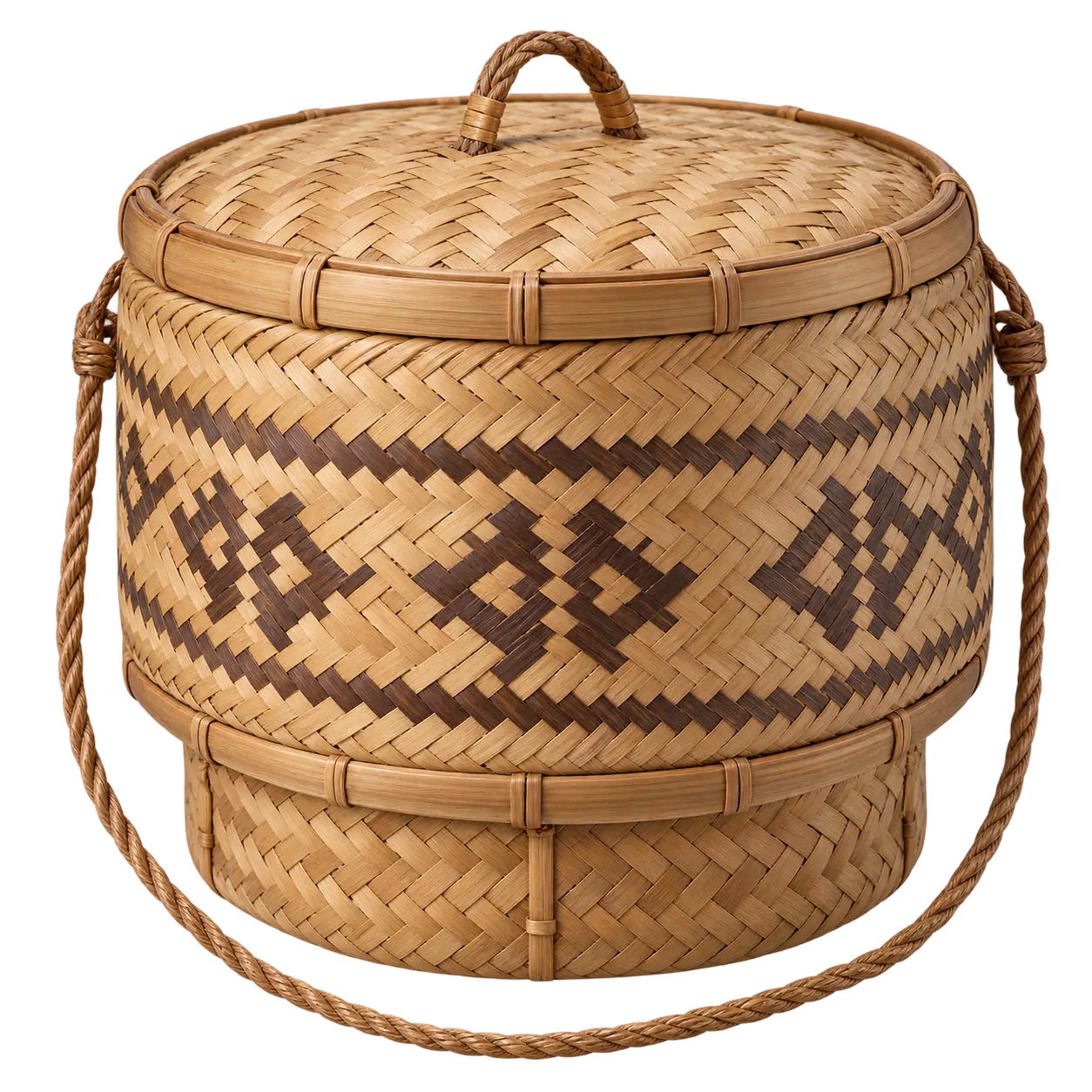
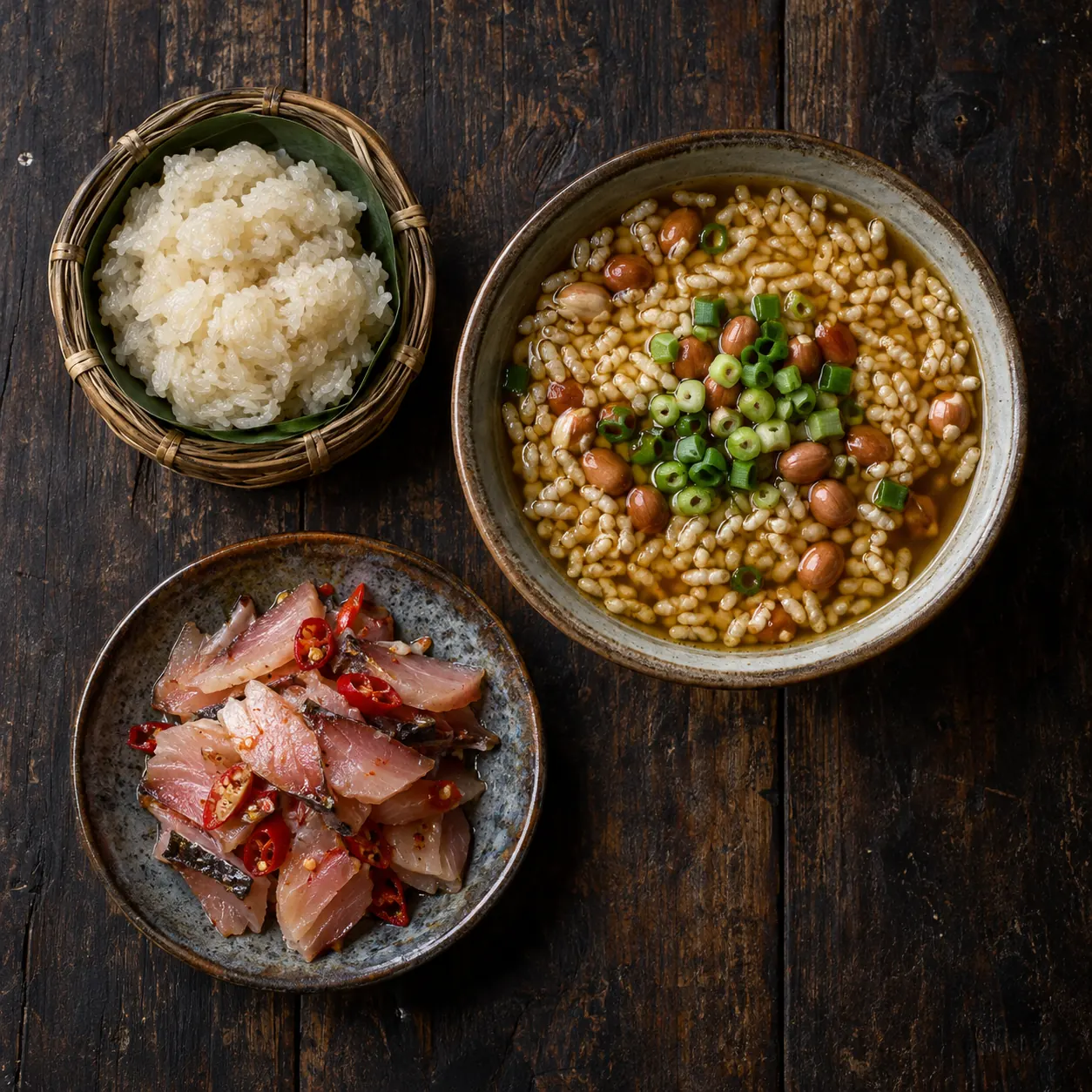
Sticky rice is the staple — fragrant local varieties, eaten by hand from bamboo baskets.
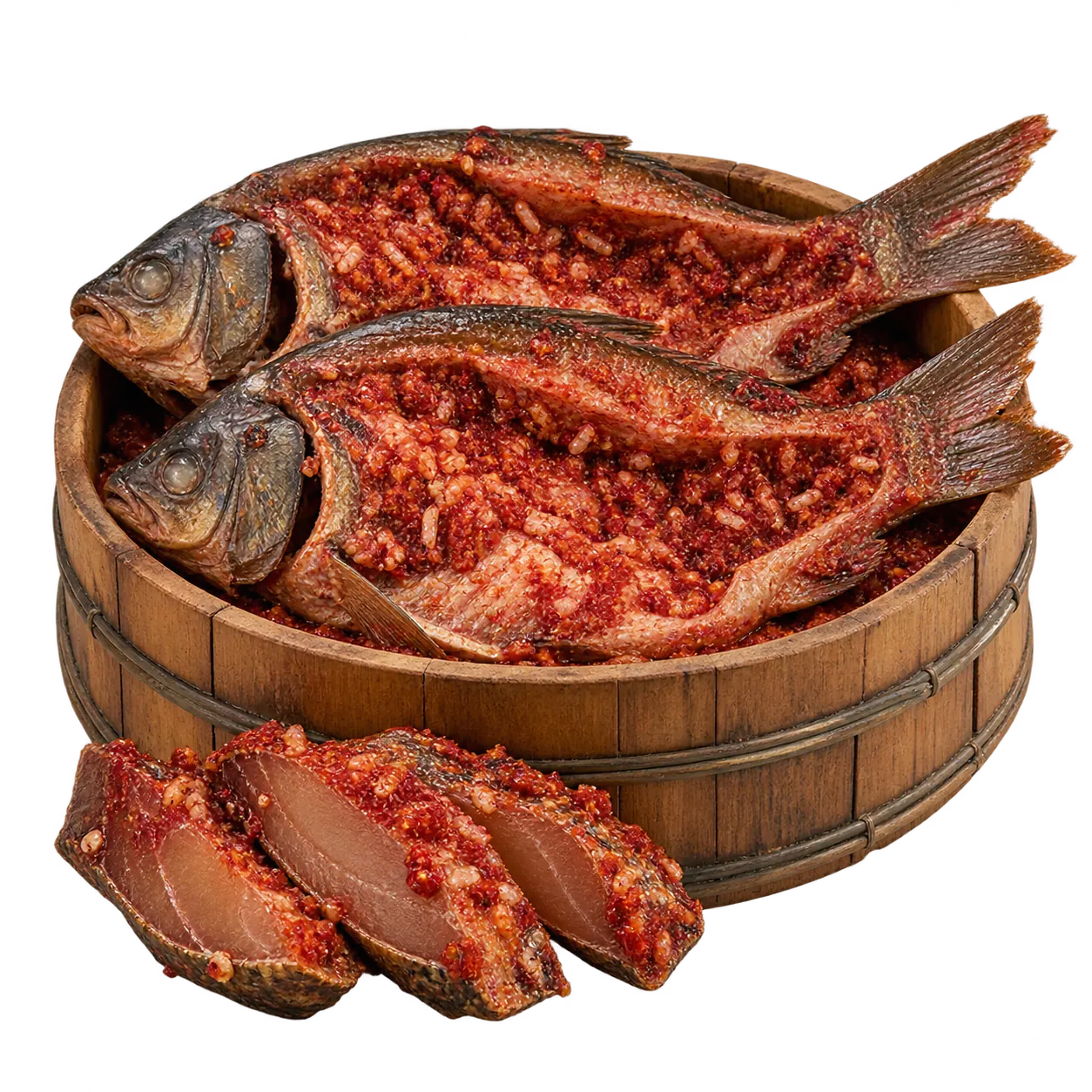
Fish, meat and vegetables are packed with rice and salt and left to sour — sour fish can keep for years.
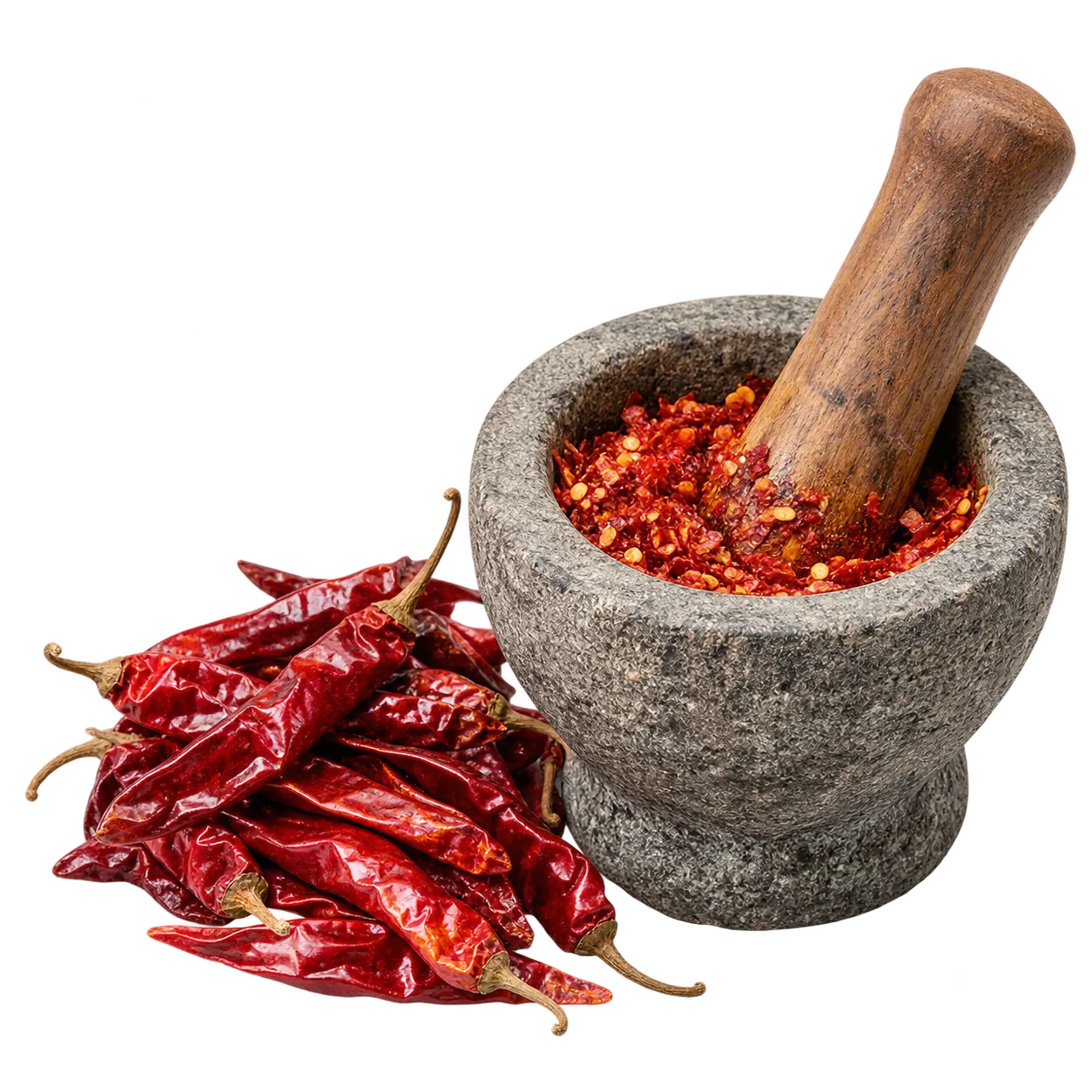
Chilli runs through almost every dish, fresh, dried, pounded and pickled.
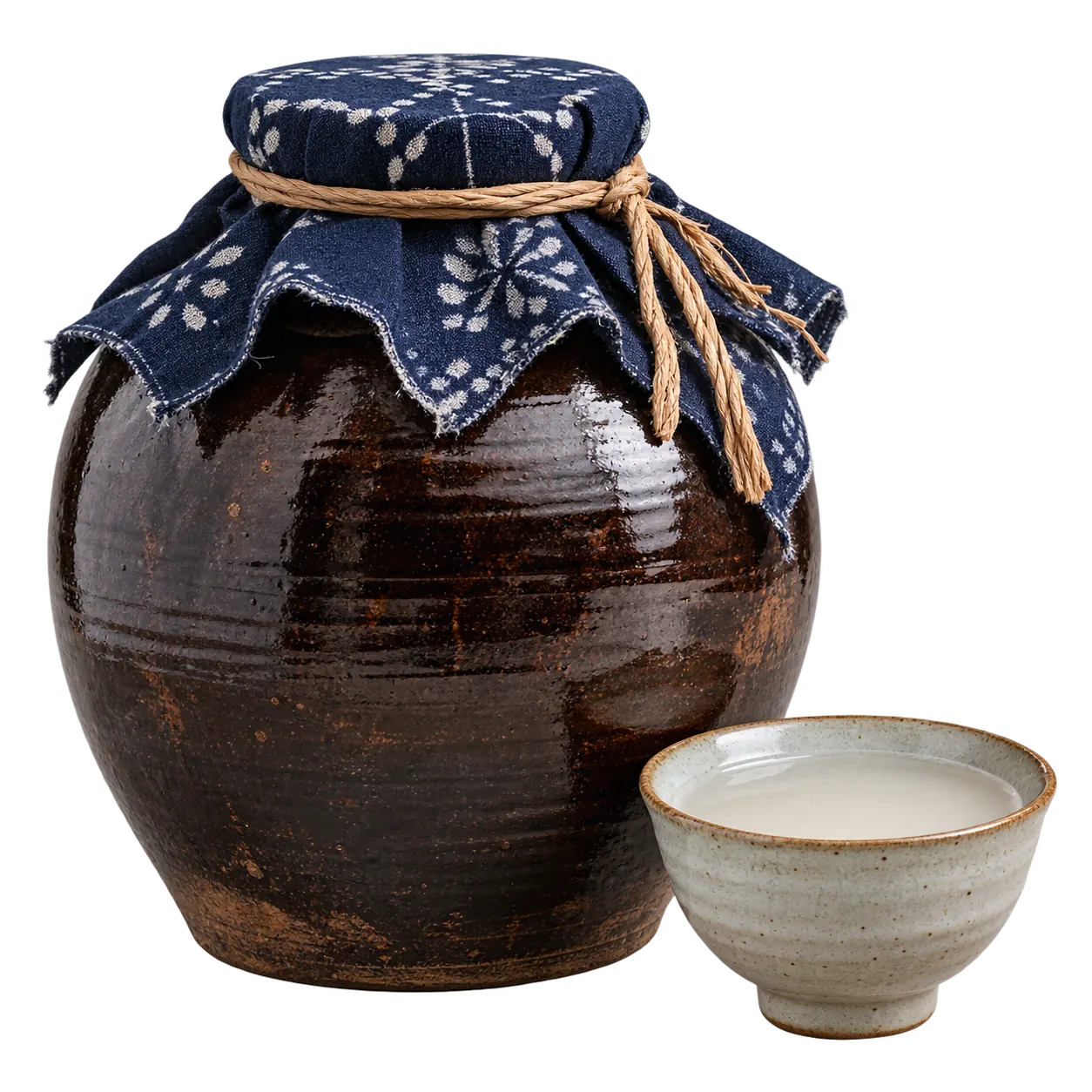
Brewed at home and poured for guests — often before they have stepped through the gate.
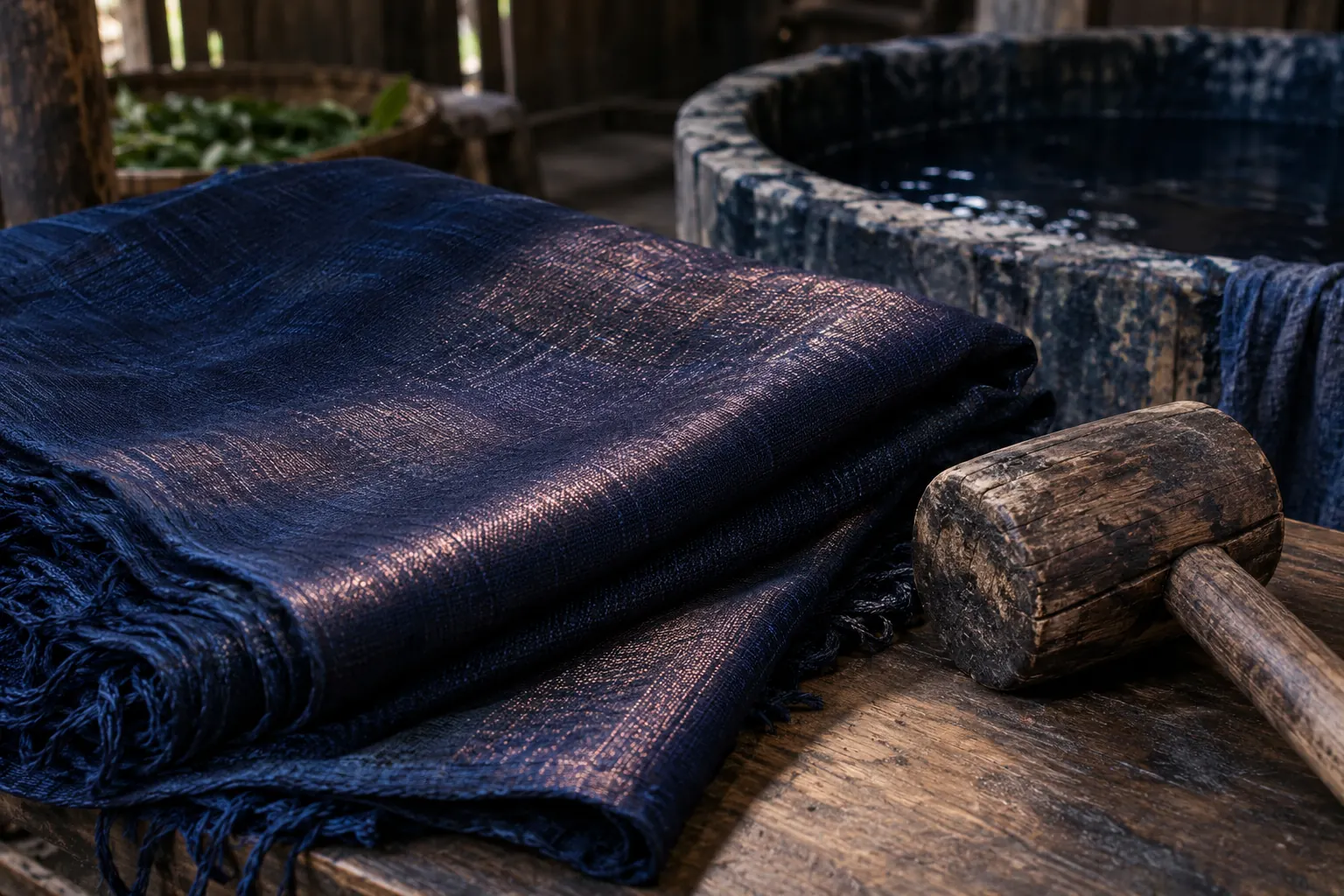
Indigo & Thread
Woven at home, dyed in indigo again and again, then pounded with wooden mallets until it gleams like metal.
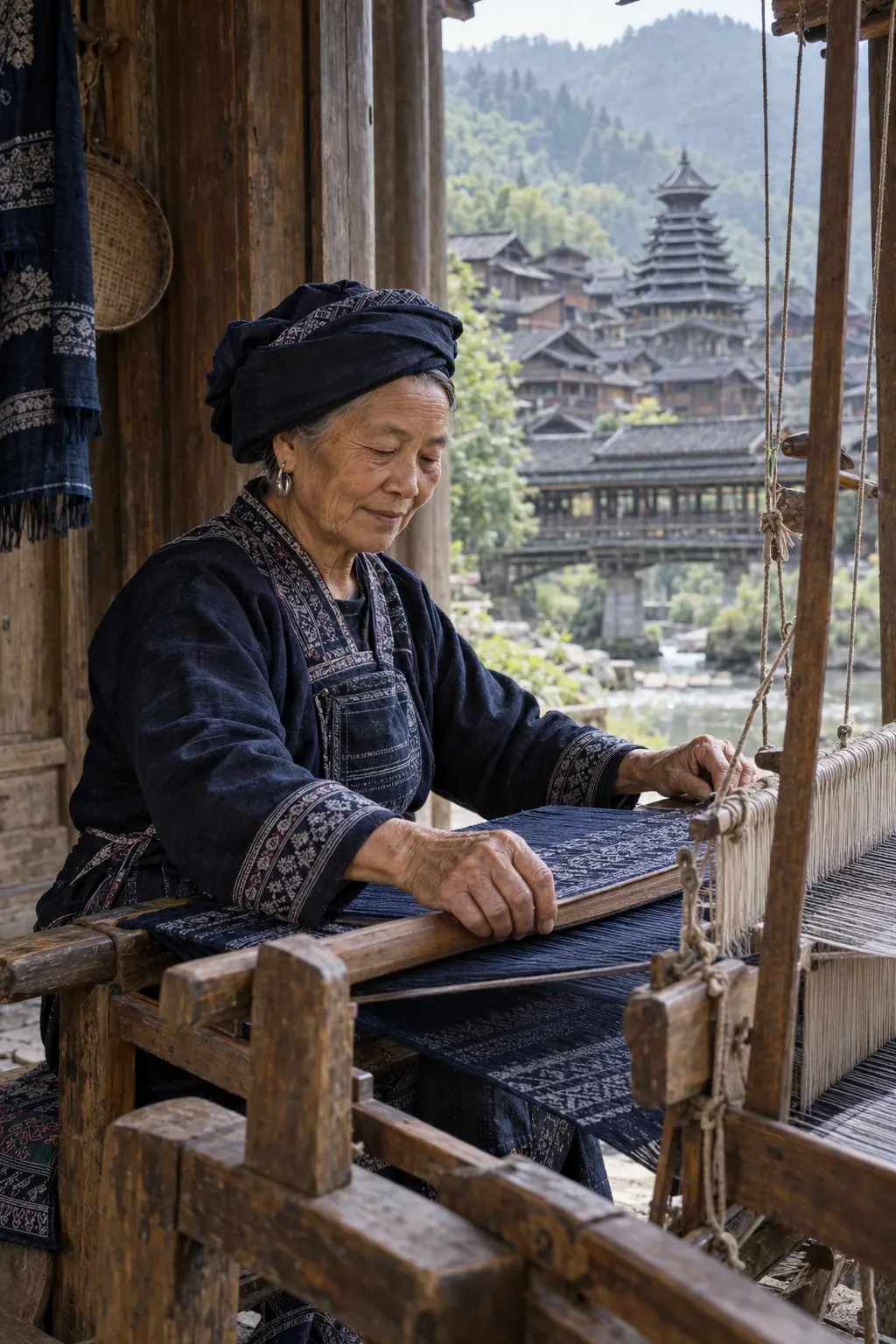
Every jacket is a season of work: spinning, weaving, dyeing, beating, embroidering cuffs and collars in patterns handed down from mothers and grandmothers.
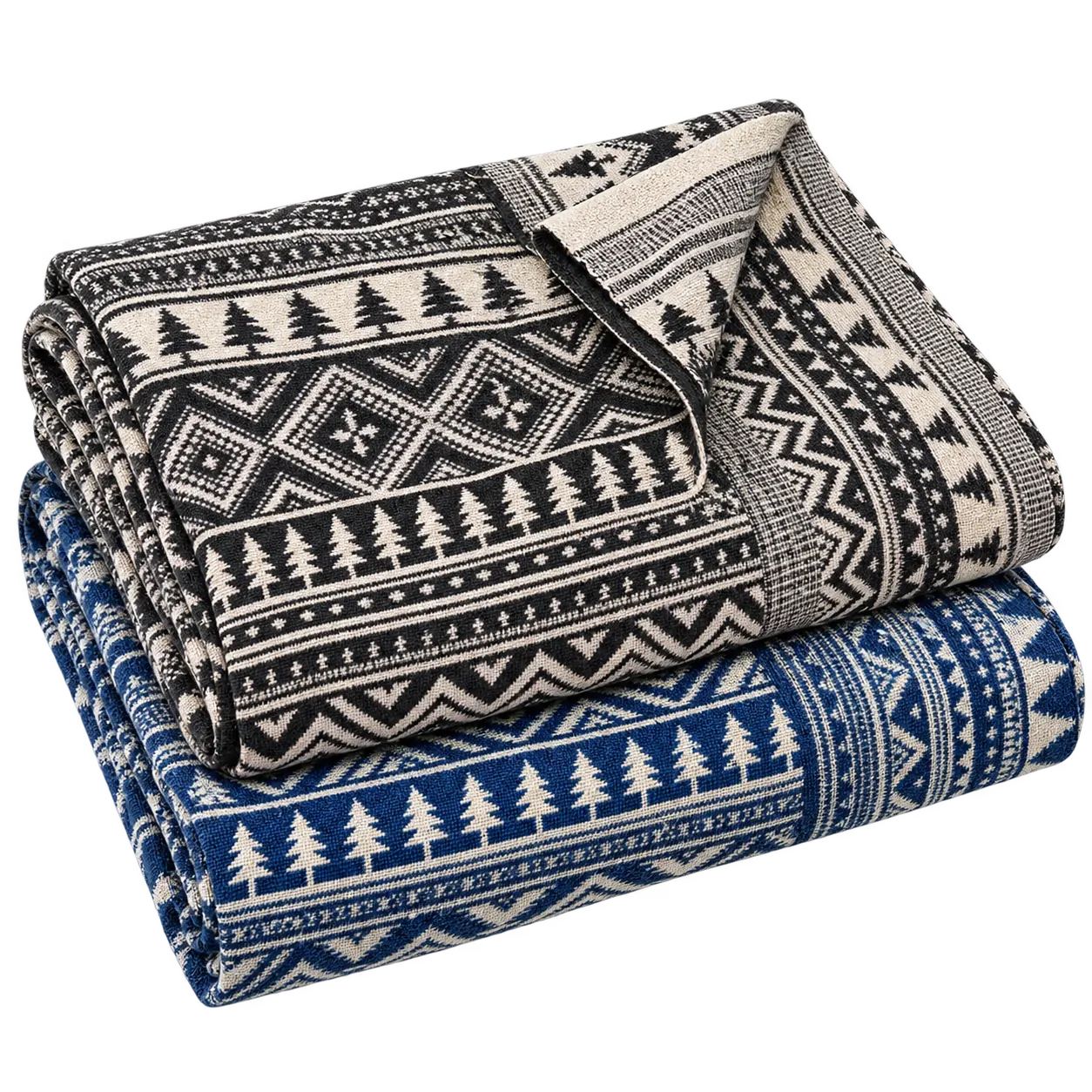
Diamonds, zigzags and fir trees, woven on home looms by counting every thread — the hardest of more than ten steps. Kam brocade weaving has been national intangible heritage since 2008. The bands dividing this page borrow its patterns.
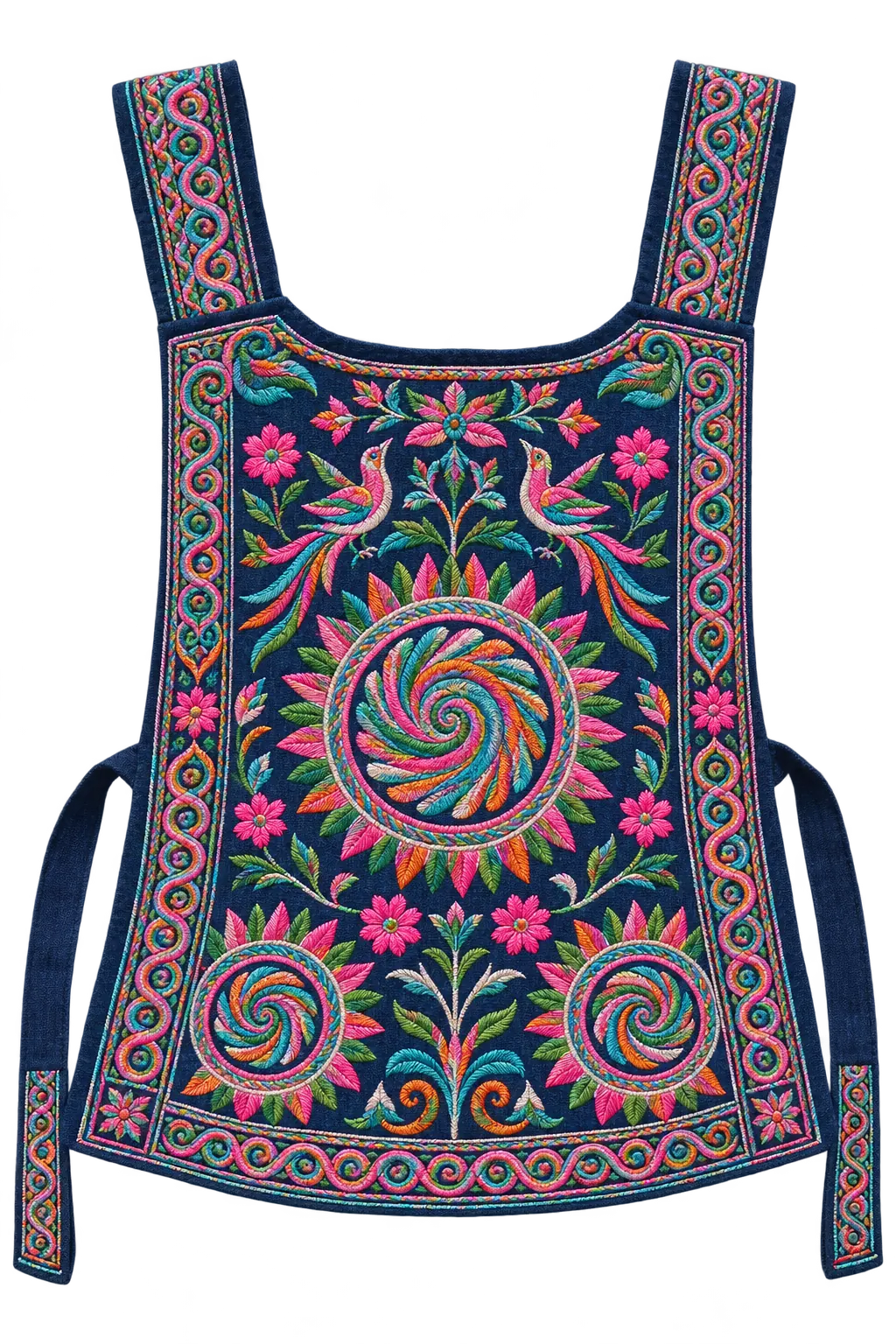
Baby carriers get a family’s finest needlework: suns, spirals, birds and flowers in dense satin stitch, wrapped around the next generation.
Handmade
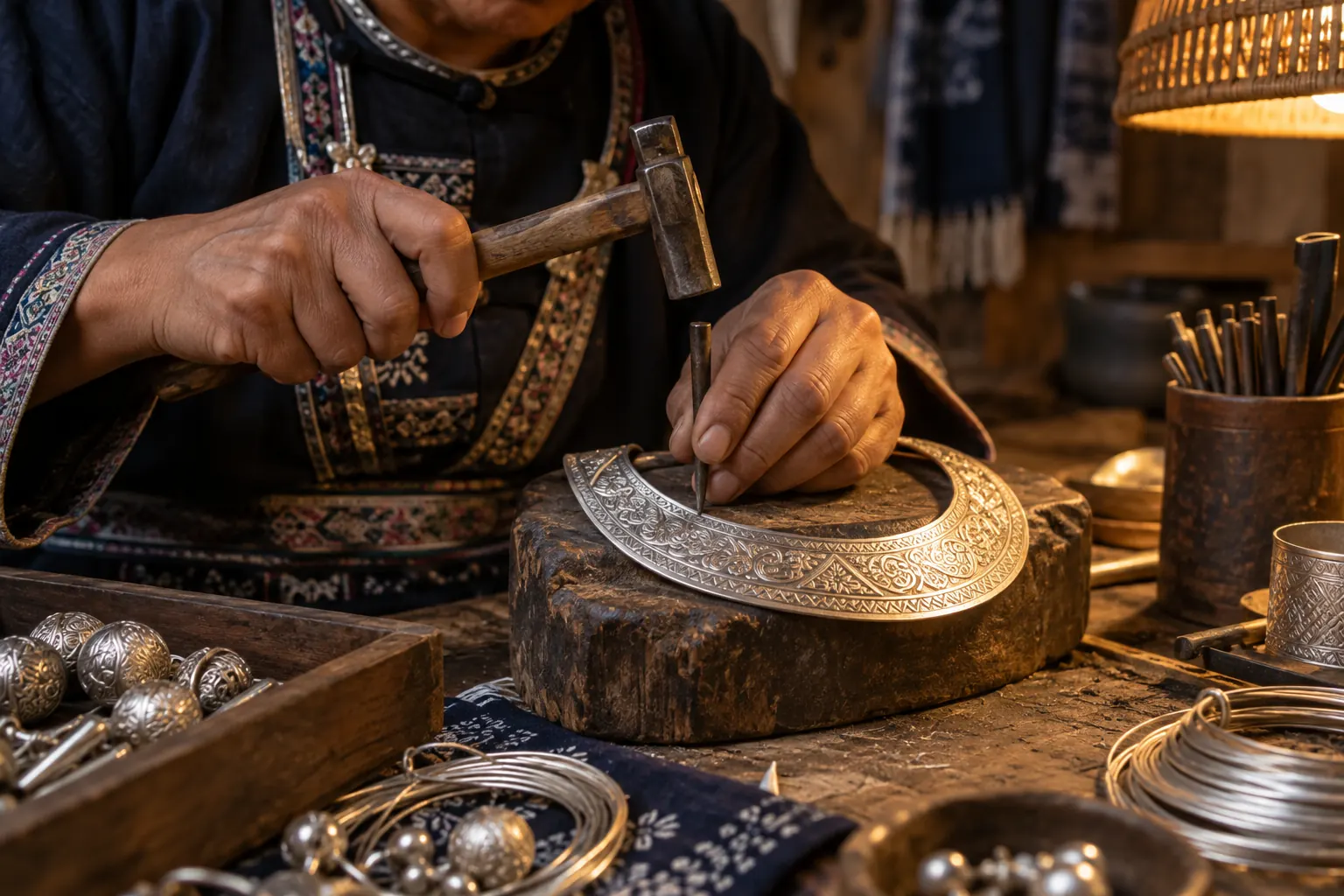
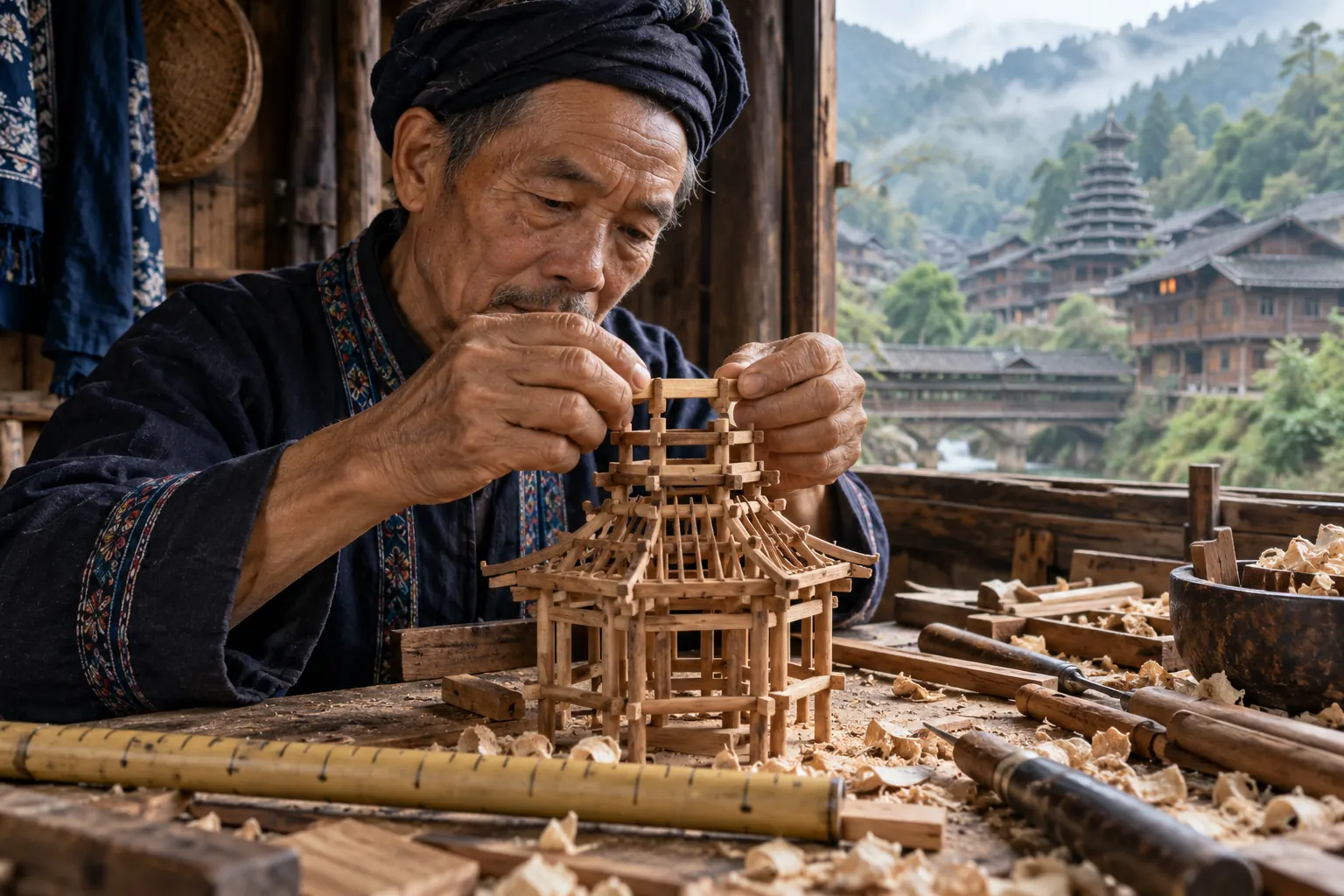
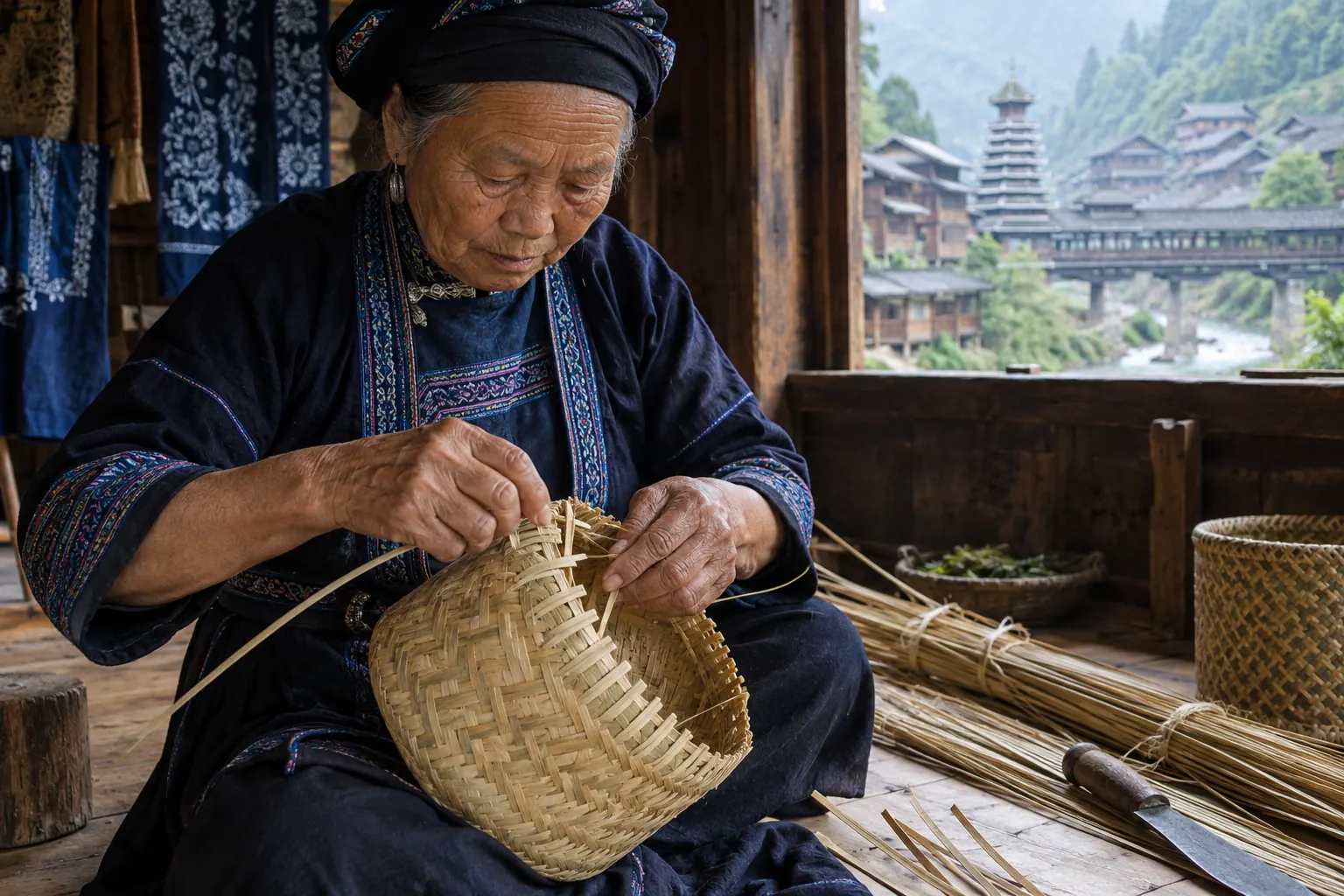
Silver hammered thin, fir joined without nails, bamboo split finer than string, silk wound thread by thread.
银饰 · Silver
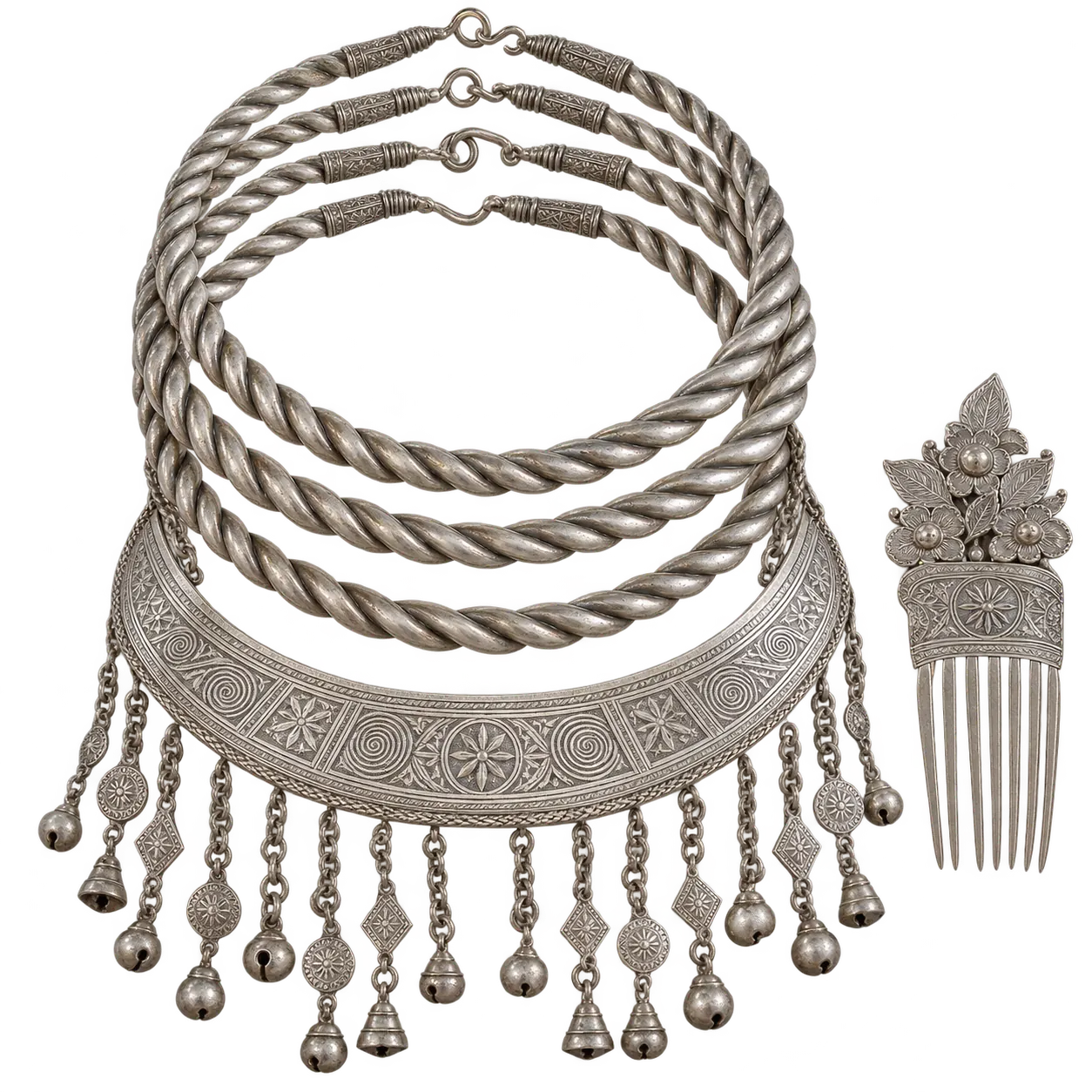
Kam silversmiths beat silver into sheet, draw it into wire and chase patterns by hand with tiny punches: stacked neck rings, collar plates hung with chains and bells, combs and hairpins. On festival days it is worn in abundance.
木构 · Wood
The craft that raises drum towers and wind-and-rain bridges — national intangible heritage since 2006 — also builds them in miniature. Every beam is pegged and slotted, and the measurements live on a marked bamboo rod, not a drawing.
竹编 · Bamboo
Bamboo is split into strips thin enough to weave tight: lidded baskets that keep sticky rice soft until lunch in the fields, carrying baskets, sieves and fish traps for the paddies.
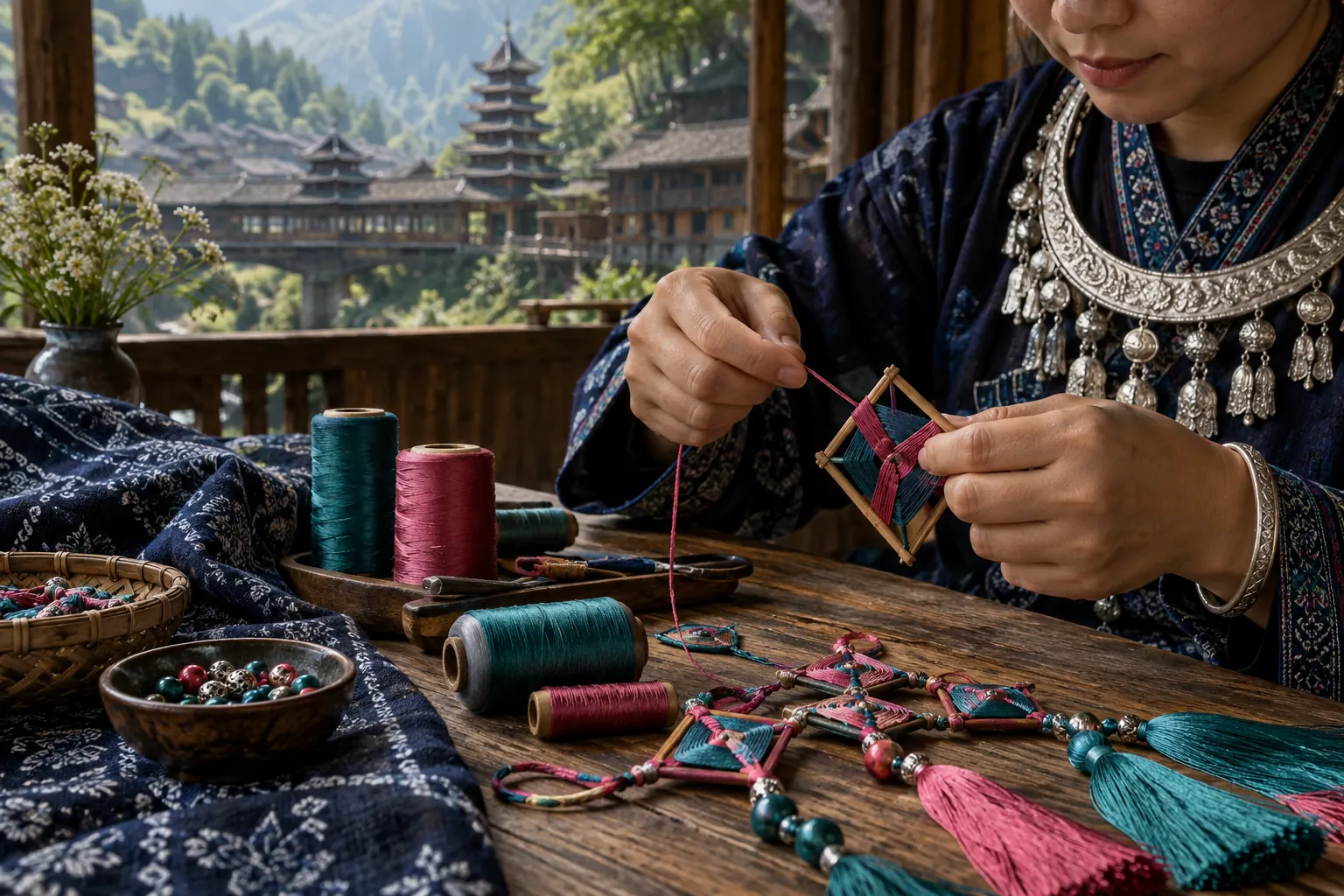

吉祥花 · Silk thread
Silk wound over tiny frames and finished with tassels. They first hung in wind-and-rain bridges and drum towers to ask for kind weather; now they travel on bags and keys. Their making is listed as intangible heritage in Liuzhou.
Through the year
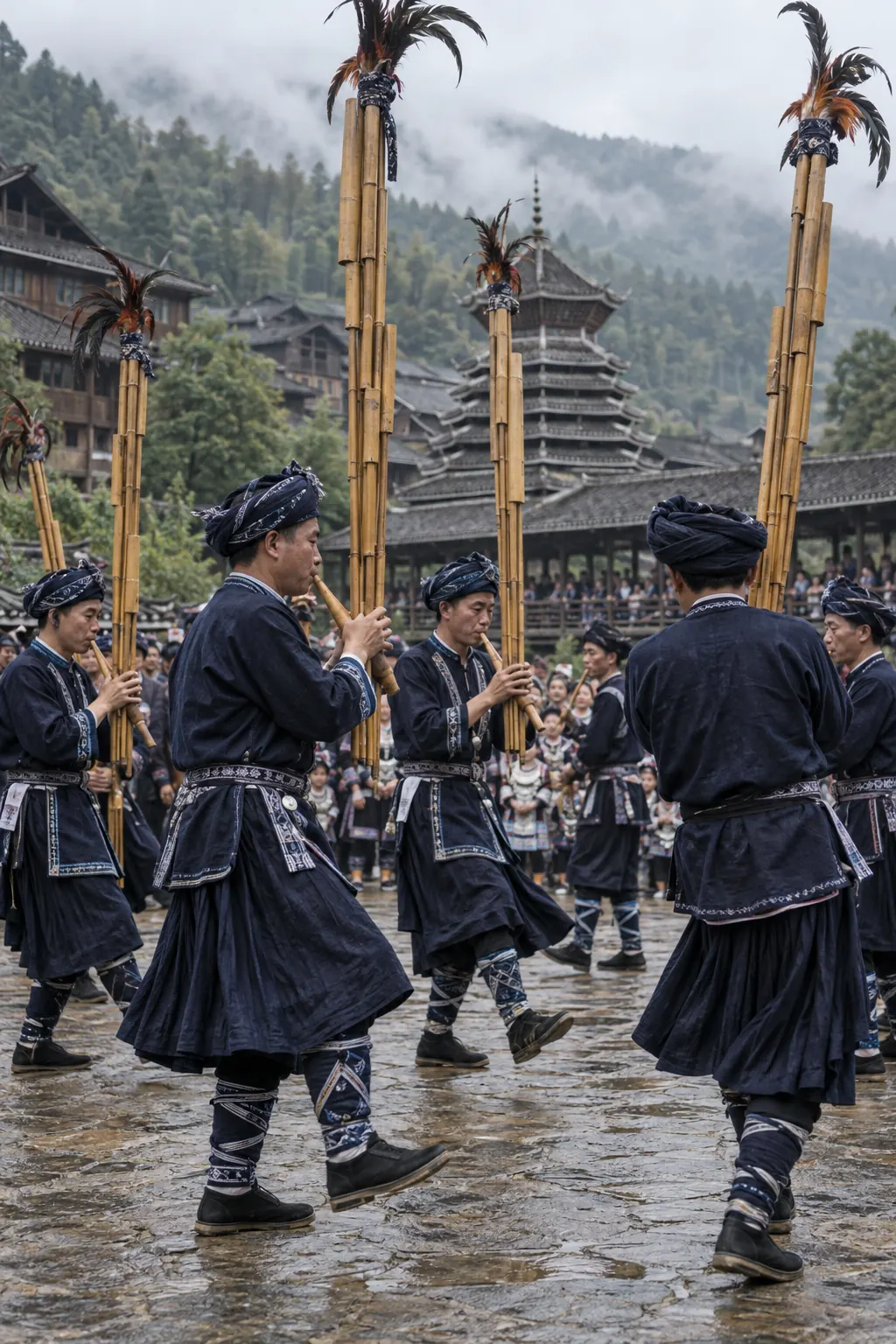
Lusheng
Bamboo reed pipes, some two metres tall, played while dancing in great circles.
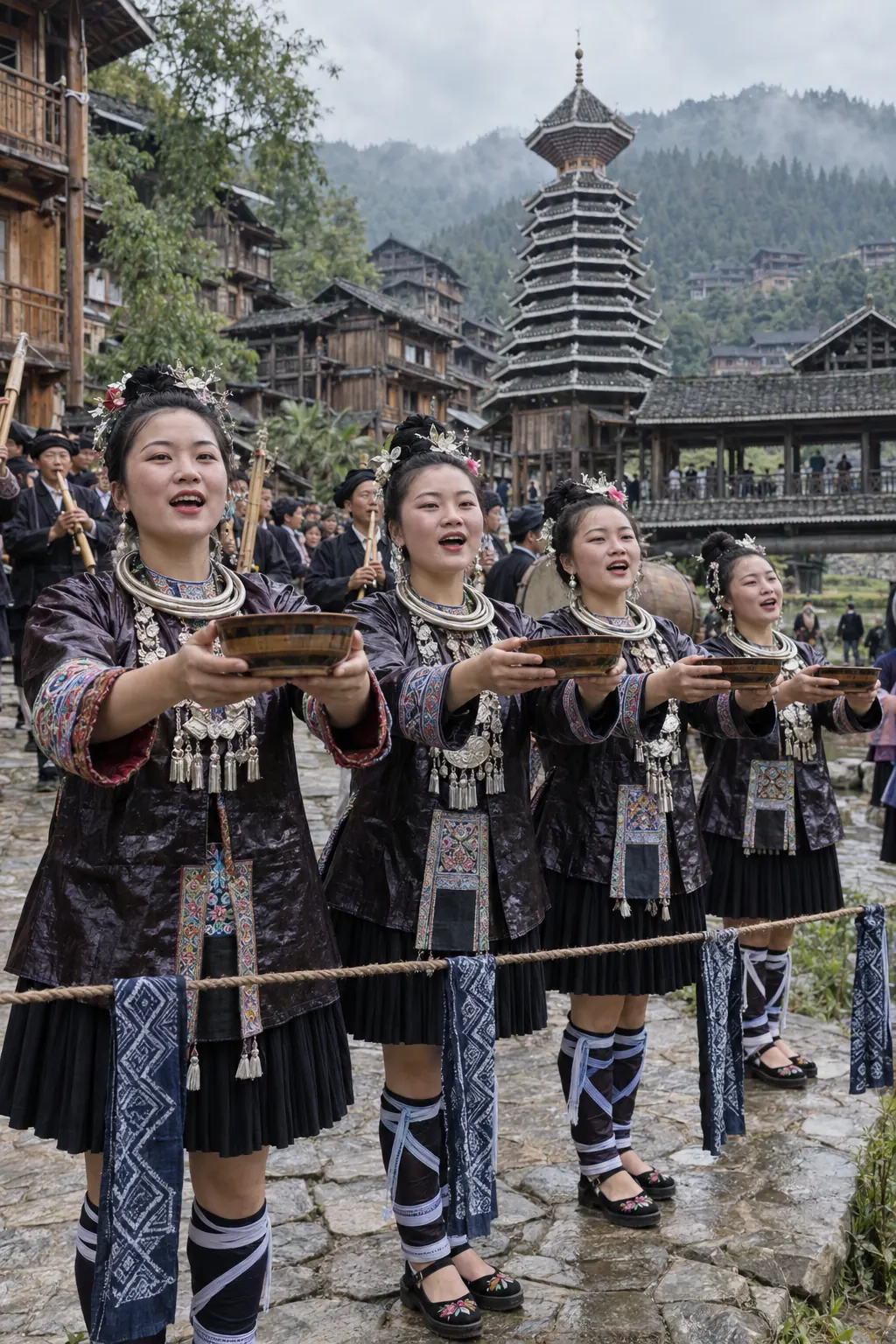
Lan lu ge · 拦路歌
When one village visits another, the guests are stopped at the gate by barriers and singers. Every verse answered in song clears the way.
Hundred-family feast
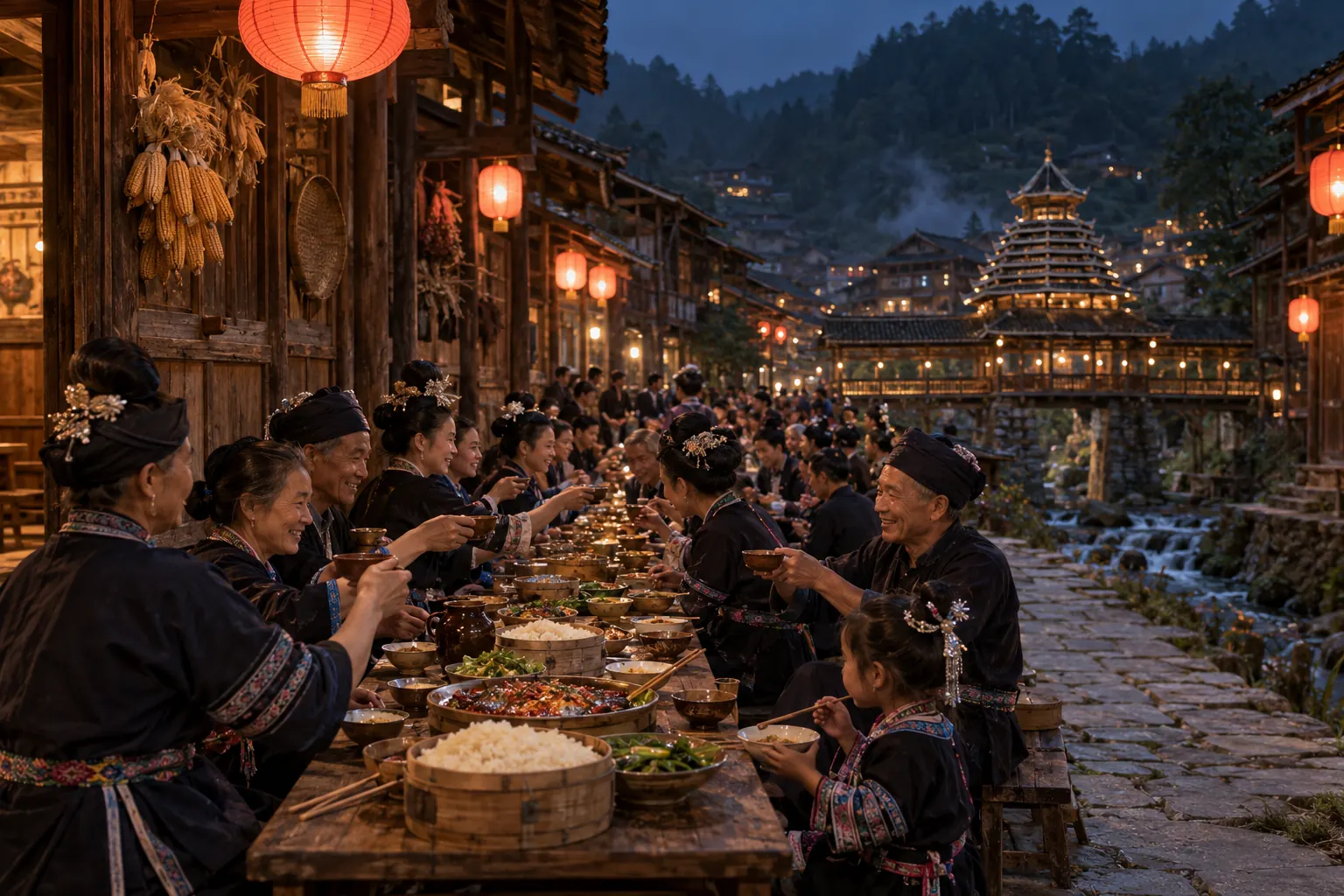
Tables joined end to end for guests and great occasions, with songs between every toast.
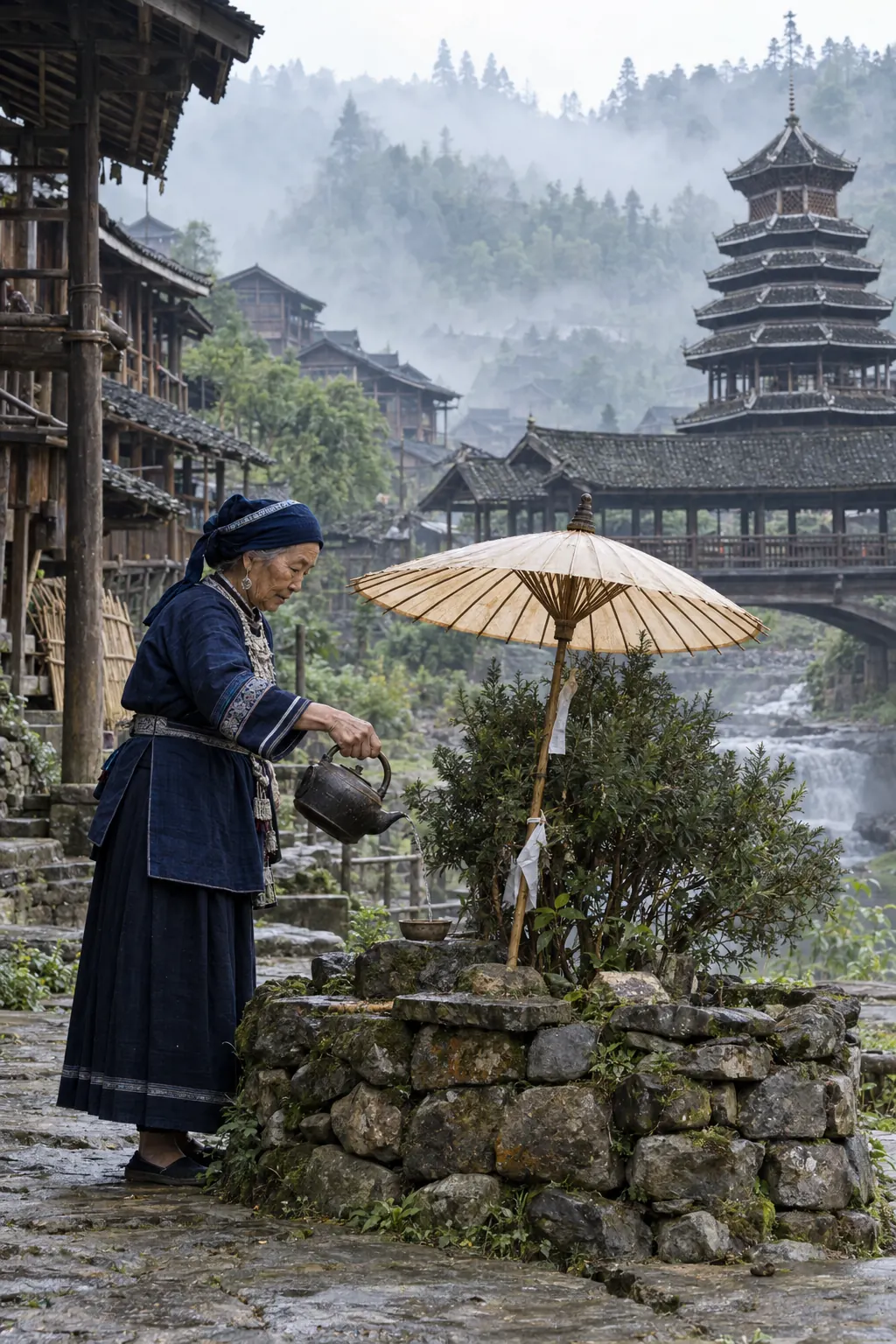
Sa Sui · Grandmother
Sa Sui, the grandmother goddess, is the most revered deity of the Kam. Many villages keep a stone altar to her.
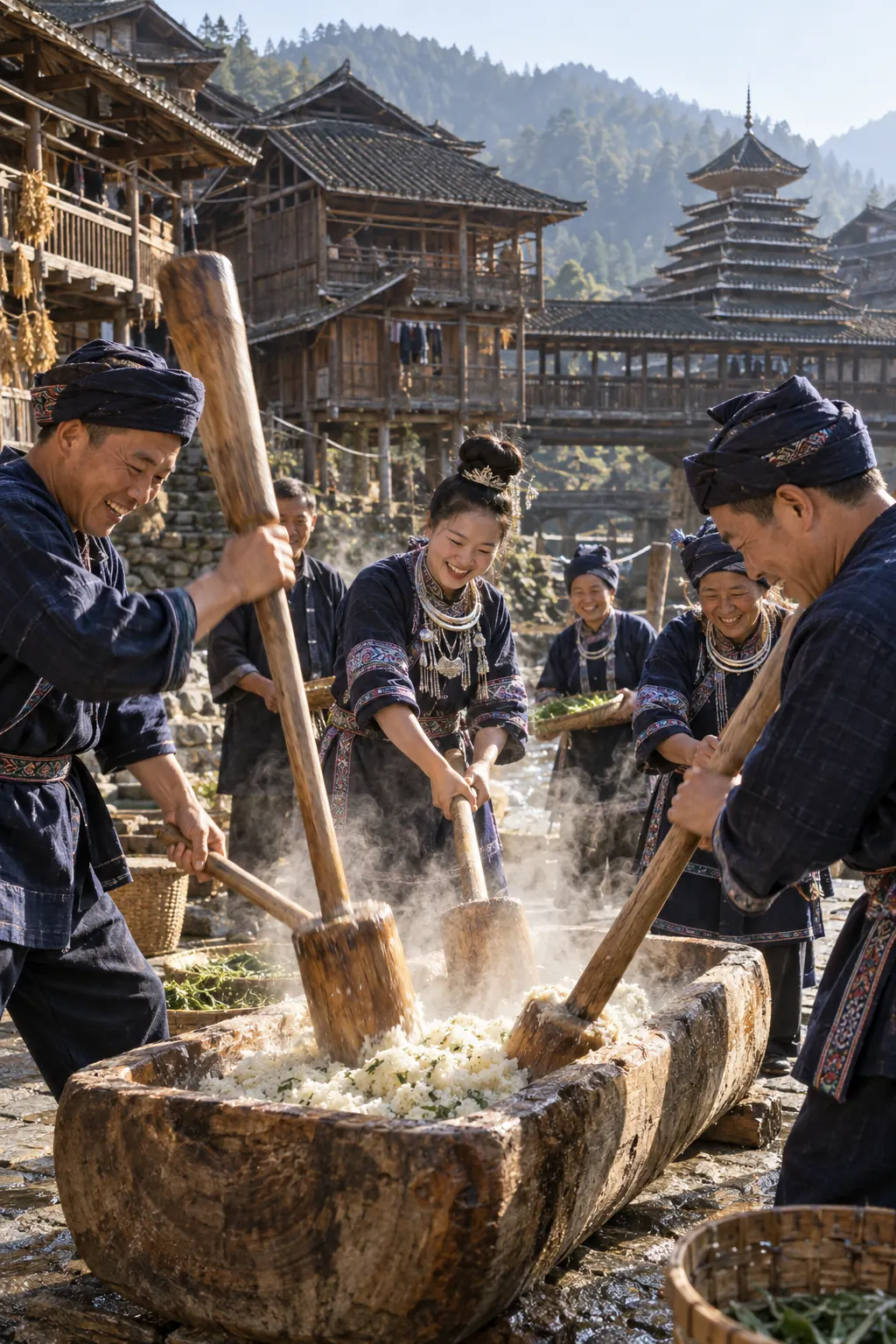
Kam New Year
Many Kam communities keep a New Year of their own once the harvest is in — alongside the Chinese one.
The Kam language · lix Gaeml
Kam belongs to the Kam–Sui branch of the Kra–Dai family, cousin to Sui, Maonan and Mulao. In the 1958 alphabet, the last letter of each syllable isn’t a sound at all. It’s the tone.
Syllables that end in -b, -d or -g take six more tones. They reuse six of the letters and sound close to their open twins — cut short, or held long.
Where to listen
Most Kam live where Guizhou, Hunan and Guangxi meet — a country of steep valleys and fir forest, governed in places by prefectures and counties named for them.
Liping County, Guizhou
One of the largest Kam villages: five clans, five drum towers, five flower bridges, five opera stages.
Sanjiang County, Guangxi
Eight villages along the river, joined by the most famous wind-and-rain bridge of all.
Qiandongnan, Guizhou
Hill country of terraced paddies where rice, fish and ducks still share the same water.
Congjiang County, Guizhou
A village famed across China for its Grand Song choirs.
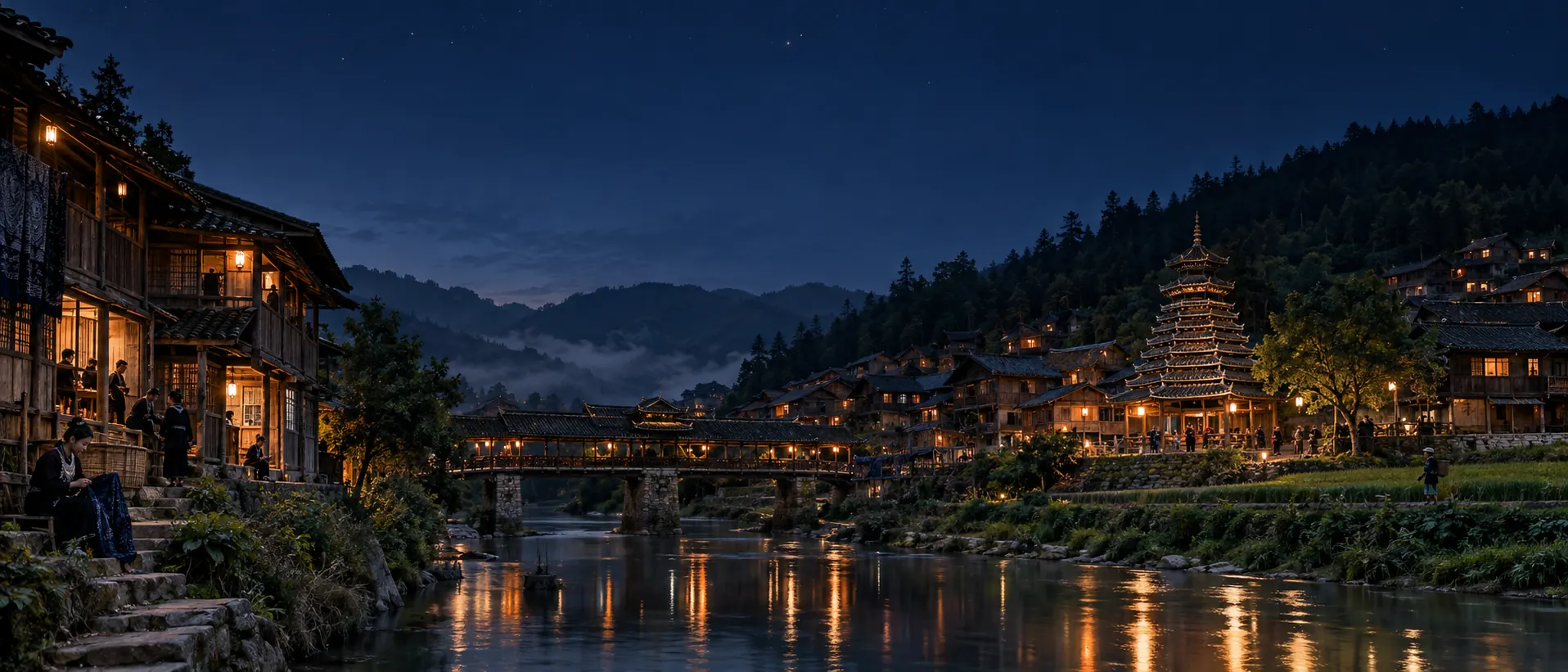
Not a place on any map. A way of living together — in song, in wood, in rice.
Until next time
Come back at festival time — and bring your voice. At the village gate, you may have to sing your way in.