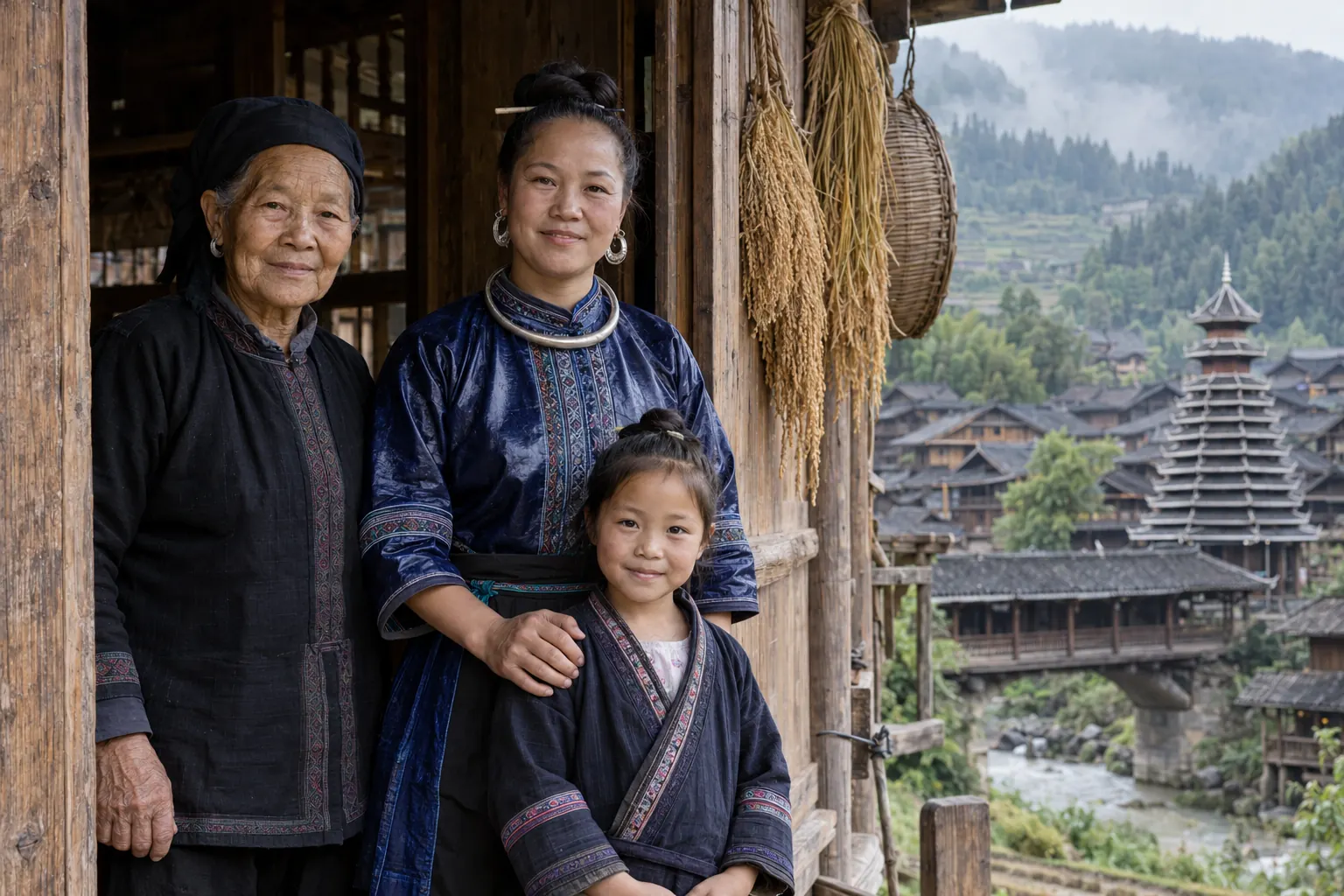
Three generations of Kam women standing together in the doorway of a timber house

The Kam

A people who
sing together.

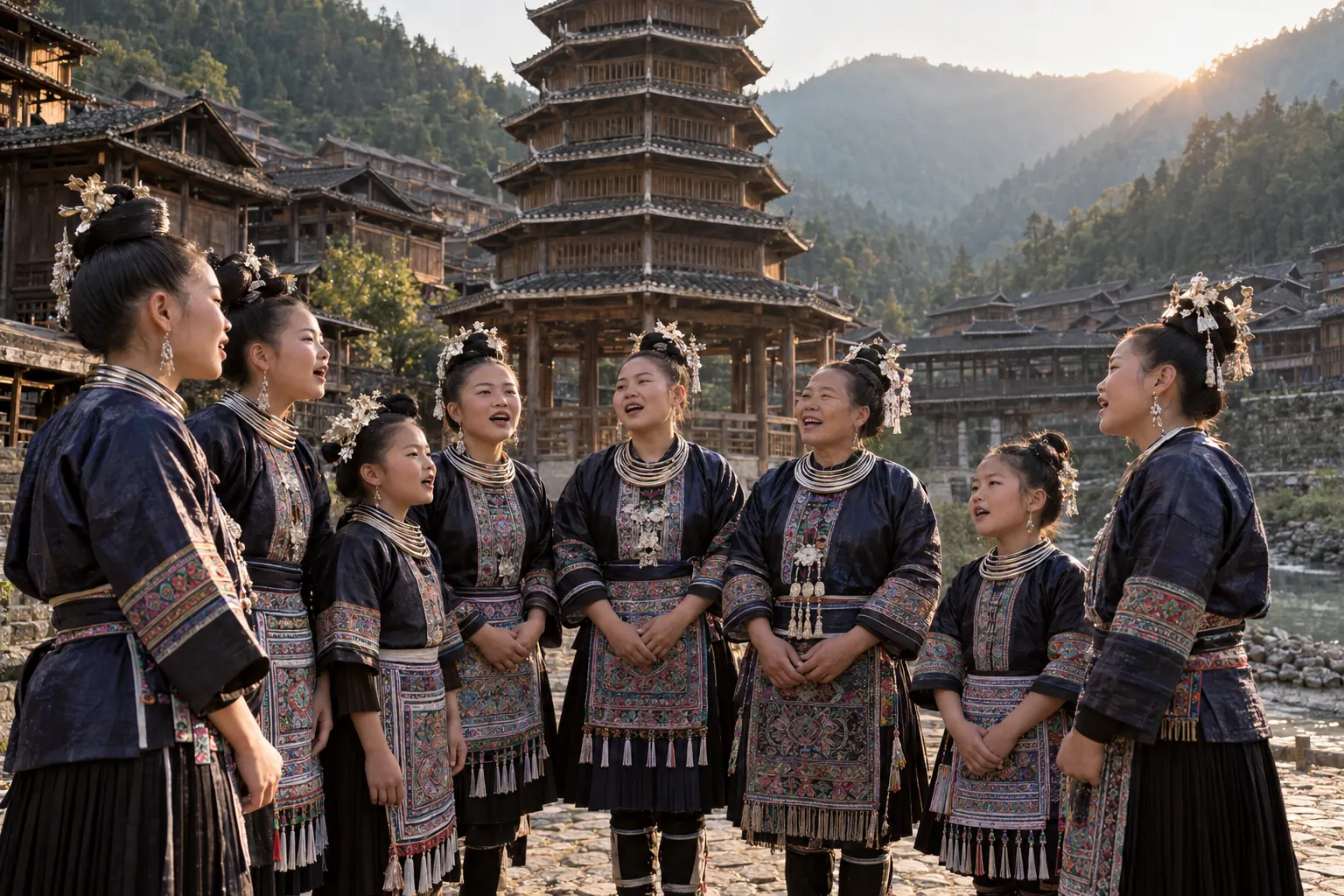
Nearly three and a half million Kam live in the mountains where Guizhou, Hunan and Guangxi meet — in villages run by neighbours, watched over by a grandmother goddess, and held together by song.

Four names, one people

Kam. Gaeml. Dong. 侗.

They call themselves Kam — written Gaeml in their own alphabet, where the final letter marks the tone. In Chinese they are the Dong, 侗族, one of China’s 56 officially recognised nationalities.

Kamwhat they call themselves
Gaemlthe same word in the Kam alphabet
Dongthe official name in China
侗族written in Chinese
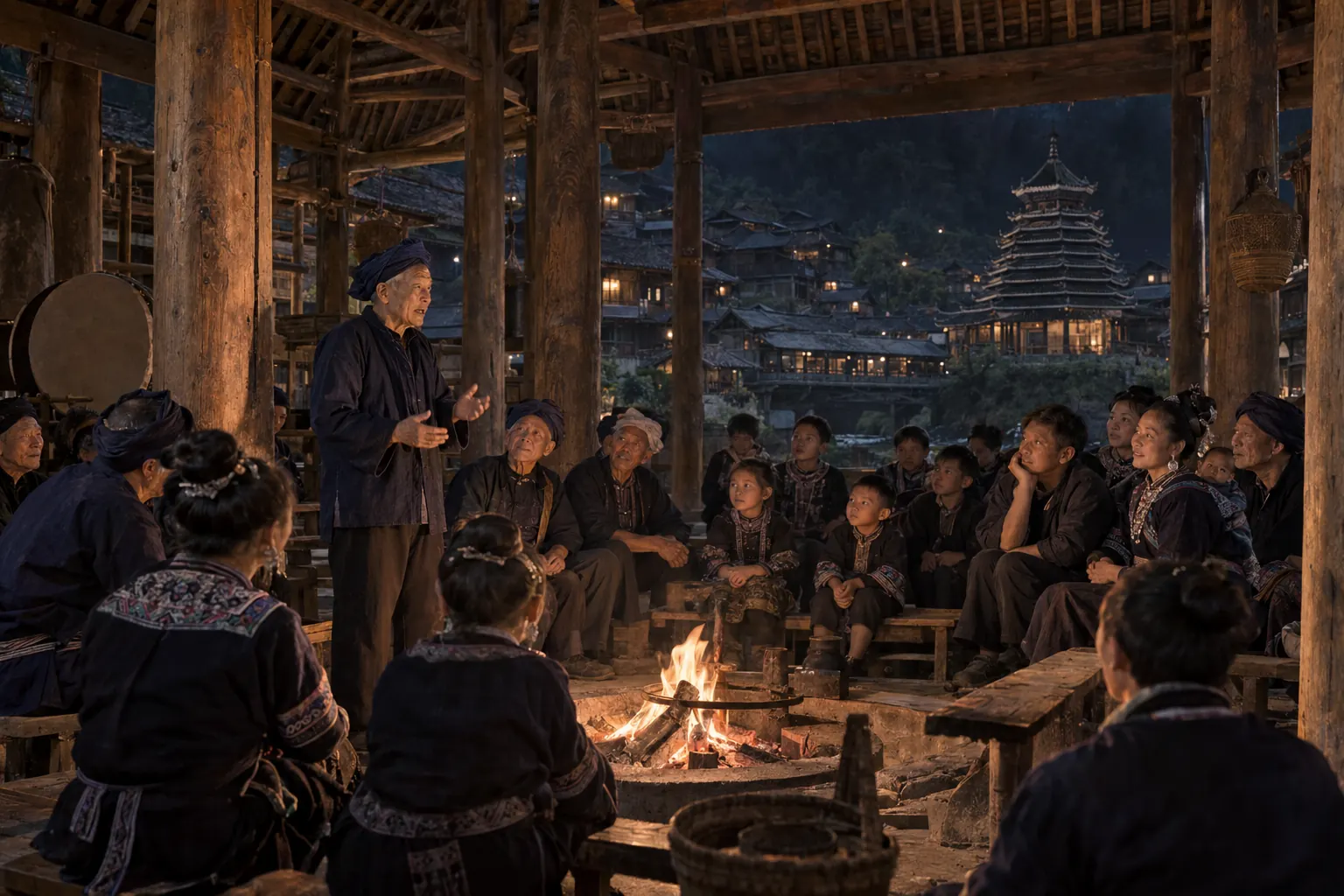
An elder speaking beside the fire pit of a drum tower while villagers listen

The kuan

Villages that govern themselves.

For centuries Kam villages bound themselves into alliances called kuan — small ones of a few neighbouring villages, large ones spanning whole valleys. Their rules, the kuan codes, were agreed by village elders and proclaimed aloud at assemblies rather than written down — a custom now listed as national intangible heritage.

The drum tower is where this happened: disputes heard by the fire, decisions announced with the drum.
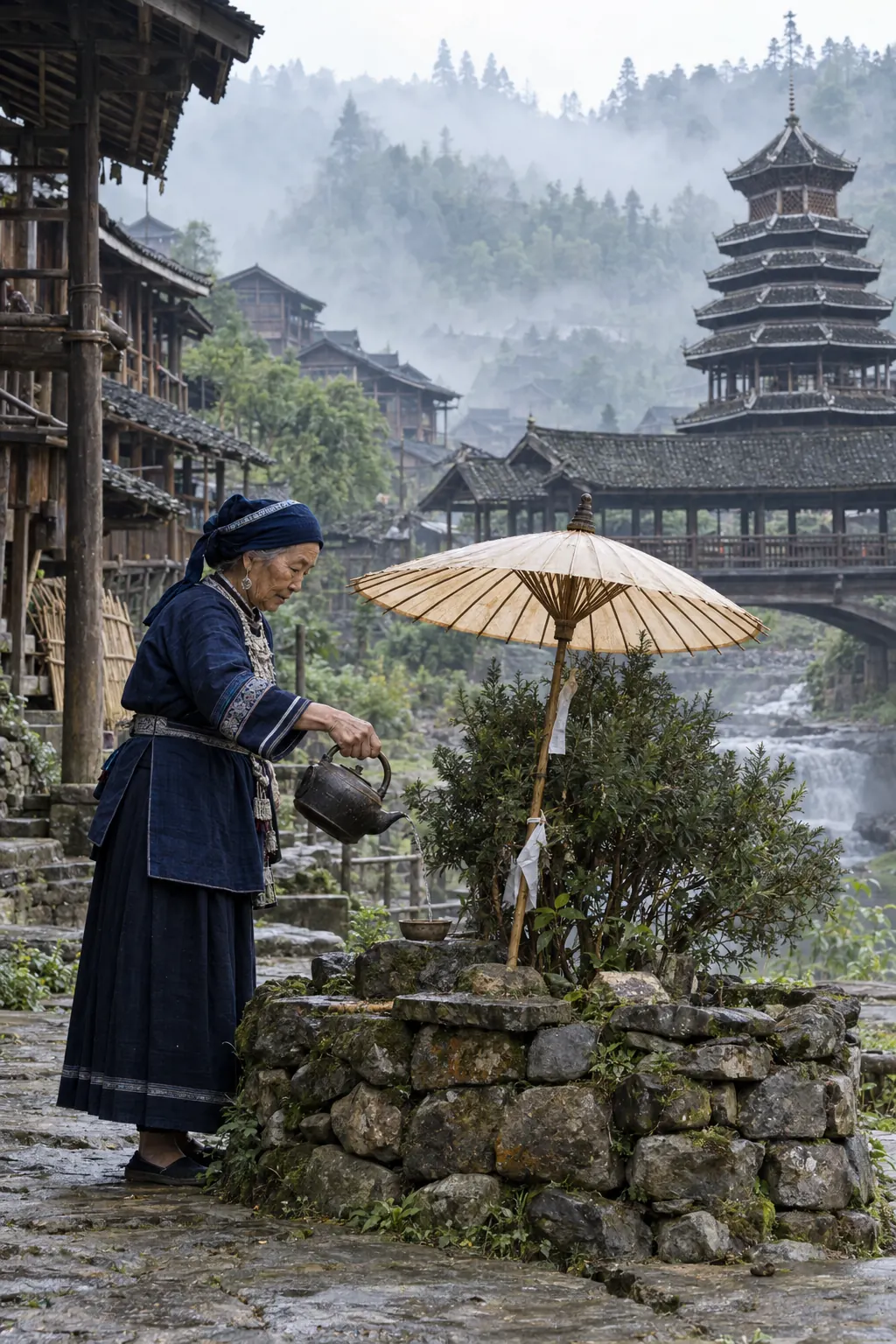
A round stone altar with an evergreen shrub and a half-open umbrella

Sa Sui

The grandmother who keeps watch.

The most revered figure in Kam belief is Sa Sui, “Great Grandmother” — an ancestral heroine and protector of the village. Many villages keep a round stone altar to her, often planted with an evergreen and shaded by a half-open umbrella.

Alongside her, older beliefs honour trees, wells, bridges and stones, with Buddhist and Taoist practice layered in over time.

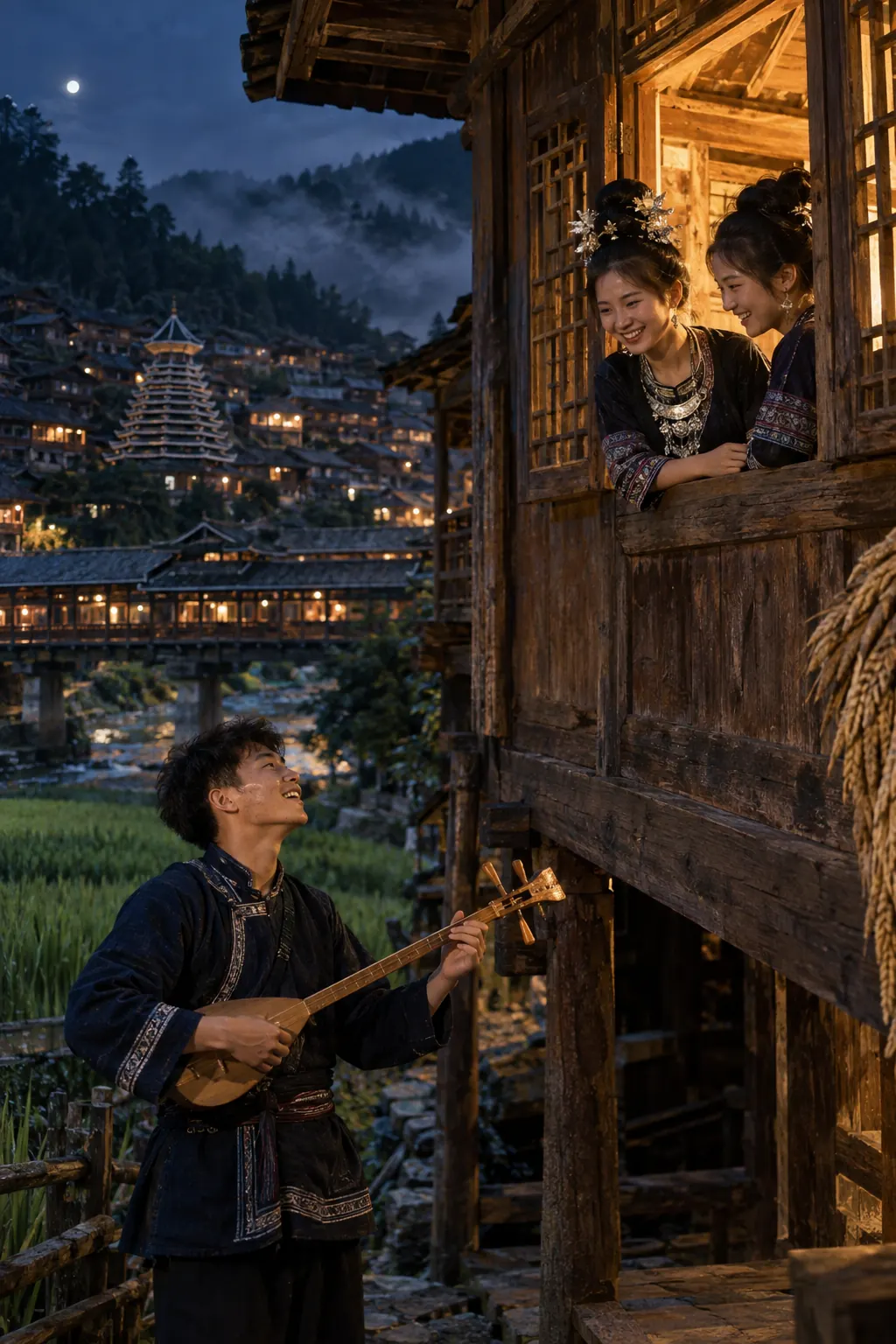
A young man playing a small pipa and singing beneath a lit window where two young women lean out

Walking songs

Courtship, by moonlight.

Young Kam men traditionally courted in song: walking at night to the houses where young women sat spinning and embroidering, and singing to them with a small pipa or the bowed niutuiqin, the “cow-leg fiddle”. The young women answered in song.

The custom is remembered as 行歌坐月 — “walking songs, sitting under the moon” — and Kam pipa songs are national intangible heritage.

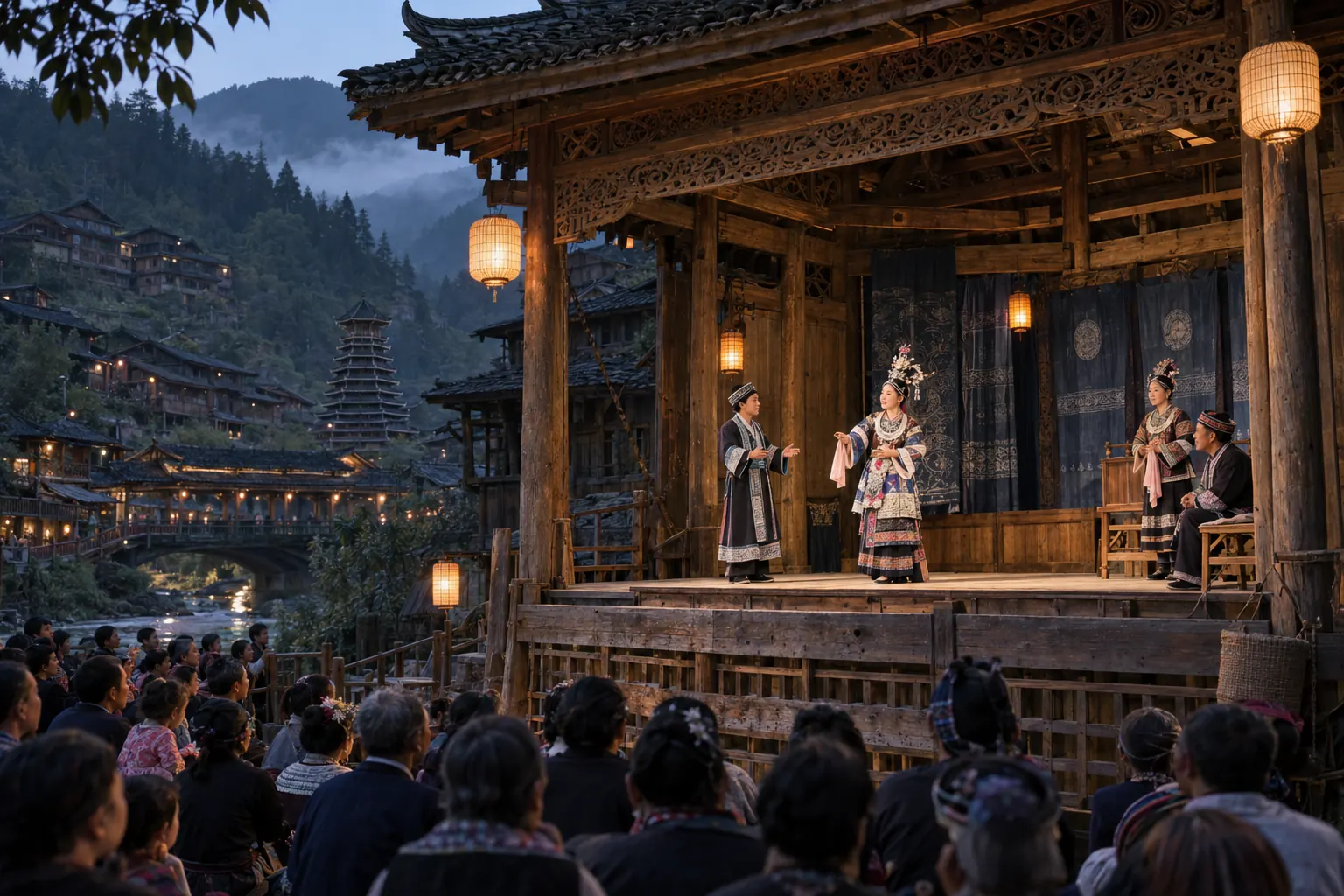
Performers in traditional costume on a carved wooden village opera stage, villagers watching

Kam opera

A stage in every village.

Kam opera was created in the early 19th century by Wu Wencai of Liping, who adapted Chinese stories into the Kam language, with singing, dialogue and fiddle. Larger villages built their own wooden opera stages; Zhaoxing has five.

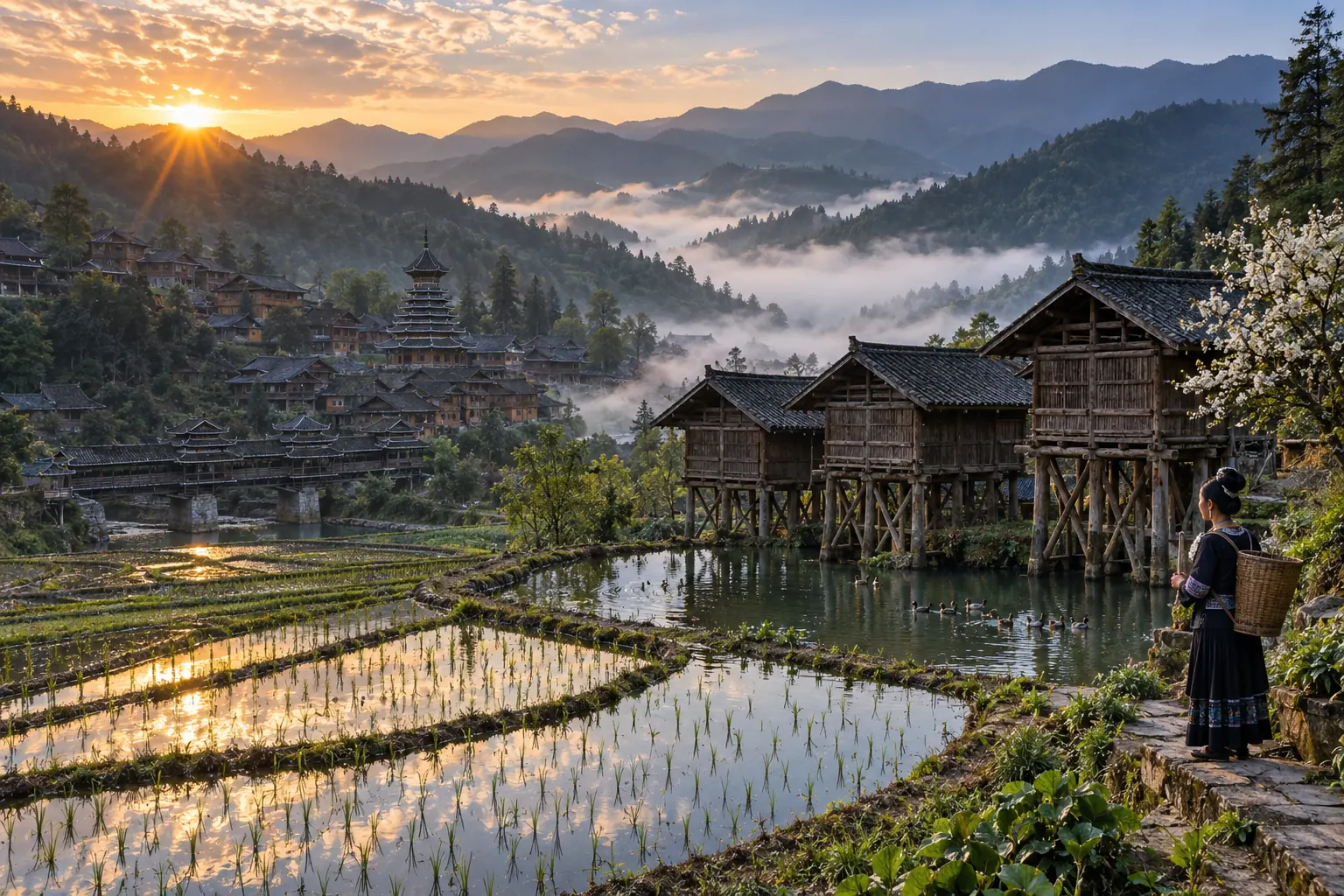
Rice terraces and timber granaries below forested hills

Eighteen-year firs

A forest for every child.

When a child was born, Kam families traditionally planted fir saplings. Eighteen years later the trees were grown — to be sold, or to build a house when the child married. Fir is the Kam building tree: every drum tower, bridge and home is made of it.